Serengeti
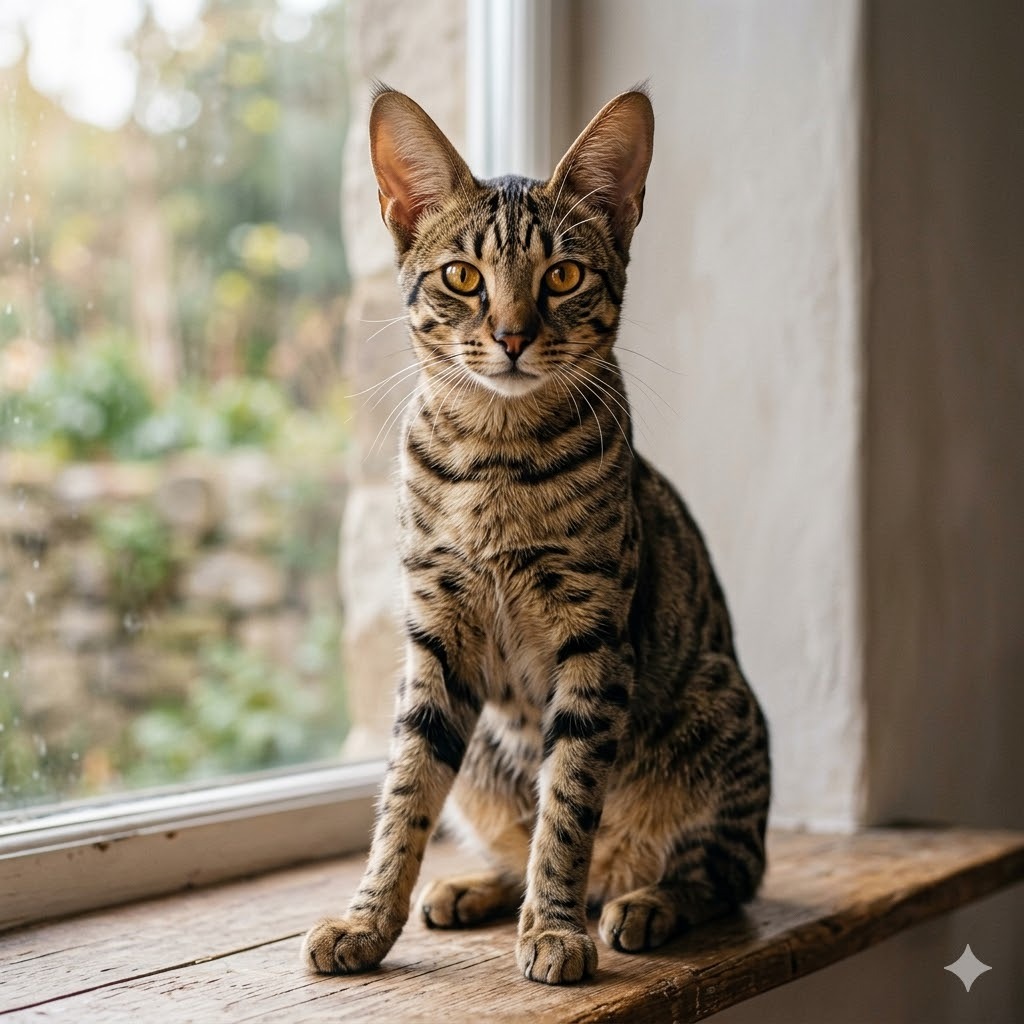
The Serengeti is a spotted, long-legged domestic cat bred to resemble a wild African serval while remaining a fully domestic pet.
🗓️ Last reviewed: July 2026
Overview
The Serengeti is a spotted, long-legged domestic cat bred to resemble a wild African serval while remaining a fully domestic pet. Athletic, confident, and highly interactive, it typically weighs 4-7 kg and lives 12-16 years. Created in California in the 1990s from Bengal and Oriental Shorthair lines, it offers an exotic look with a friendly, people-oriented personality and no wild ancestry at all.
History & Origins
The Serengeti is a modern designer breed developed in the mid-1990s by conservation biologist Karen Sausman in California. Her goal was to produce a cat that captured the tall, elegant, spotted appearance of the African serval without using any wild cat blood - a domestic-only alternative to hybrid breeds.
To achieve this, she crossed the Bengal (already a spotted breed) with the Oriental Shorthair (prized for its long legs, large ears, and lean build). The result was a tall, spotted, big-eared cat that suggested a serval in miniature while being entirely a house cat in temperament and genetics.
The breed remains rare and is still under development. It is recognised by TICA as a breed in progress rather than a fully championship-status breed, and numbers worldwide are small. Because the Serengeti is defined by outcrossing to Bengals and Orientals rather than by a closed gene pool, individual cats can vary noticeably in type. Serious breeders continue to select for the tall stance, bold spotting, and sound, sociable character.
Appearance
The Serengeti is a medium-sized cat that looks larger than it is because of its long legs and upright, alert posture. Males weigh roughly 5-7 kg; females 4-5 kg. The overall impression is of a lean, leggy, wild-looking cat.
Key features:
- Coat: short, dense, and fine, lying close to the body. Low maintenance and slightly glossy.
- Colour & pattern: the signature look is bold solid spots on a tawny-gold ground, but the breed also comes in solid black, silver-spotted, and smoke variations.
- Head: a modified wedge with a broad muzzle and strong chin.
- Ears: very large, tall, and upright, set high on the head - among the most distinctive features, echoing the serval.
- Eyes: large and round, ranging from gold to green, set well apart.
- Legs: notably long, straight, and fine-boned, giving the breed extra height.
- Body: long, muscular, and lithe, with a level back.
- Tail: medium length, tapering, often ringed with a dark tip.
Temperament & Character
The Serengeti is active, confident, and boldly sociable. This is not a shy cat - most greet visitors head-on, investigate everything, and stay involved in whatever the household is doing. Curiosity and fearlessness are defining traits.
The breed is highly interactive and forms strong bonds with its people. Many are talkative, following owners around and commenting on daily events. They tend to be affectionate on their own terms - engaged and companionable rather than clingy lap cats, though plenty enjoy close contact once they trust you.
Energy runs high. Serengetis are agile jumpers and climbers that make full use of vertical space. They are quick learners, often mastering fetch, harness walking, and simple tricks. Boredom leads to mischief, so mental and physical outlets matter.
With their Bengal and Oriental heritage, they retain strong hunting drive and a playful, sometimes demanding streak. They generally do well in busy homes that can match their pace.
Care
Coat & Grooming
The short, close coat is very low maintenance. A weekly brush or rubber-mitt grooming removes loose hair and keeps the coat glossy; more during seasonal sheds. The breed does not mat.
Routine care covers the basics: check and clean the large ears regularly, trim claws every couple of weeks, and brush teeth several times a week to guard against dental disease. Most Serengetis tolerate handling well when introduced to it young.
Exercise & Enrichment
This is a high-energy breed that needs real outlets. Provide tall, sturdy cat trees and shelves for climbing, interactive wand-toy sessions daily, and puzzle feeders to work the mind. Many enjoy harness walks and clicker training.
Without enough stimulation, a Serengeti will invent its own entertainment - opening cupboards, knocking objects off shelves, and vocalising for attention. Two solid play sessions a day are a sensible minimum.
Health & Lifespan
Average lifespan is 12-16 years.
As a newer breed drawn from Bengal and Oriental lines, the Serengeti is generally healthy, but owners should be aware of concerns common to its founding breeds:
- Hypertrophic cardiomyopathy (HCM) - reported in Bengals; responsible breeders screen breeding cats.
- Progressive retinal atrophy (PRA) - seen in some Bengal lines; DNA testing available.
- Pyruvate kinase deficiency (PK def) - a Bengal-associated anaemia; DNA test available.
- Dental disease - Oriental-type cats can be prone to it.
- Digestive sensitivity - occasional loose stools in active, food-driven cats.
Choose a breeder who health-tests parent cats and can discuss the lines behind their kittens.
Feeding & Nutrition
Adults typically eat 50-80 g of quality cat food per day, adjusted for size and activity. Given their high energy, most Serengetis burn calories readily, but measured meals still beat free-feeding for maintaining condition.
A high-protein diet suits this athletic, hunt-driven breed well. Wet food or a wet-and-dry mix supports hydration and urinary health. Fresh water should always be available, and many cats enjoy a fountain.
Because some individuals inherit a sensitive stomach, introduce any diet change gradually over a week or so.
Living With
Litter
Standard provision: one box per cat plus one spare, scooped daily. A large, uncovered box suits this active, athletic breed. Low-dust, unscented litter is generally preferred.
Multi-cat households
Serengetis are usually confident and social, and often do well with other cats, especially active breeds that can keep up. Introduce newcomers gradually. Their high energy can overwhelm timid or elderly cats, so match temperaments thoughtfully.
Indoor vs outdoor
Indoor-only (with a catio or supervised harness walks) is safest. The breed is curious, bold, and fast, which makes free roaming risky. Rare and striking cats also attract unwanted attention. Vertical space and daily play keep an indoor Serengeti thoroughly satisfied.
Pros & Cons
Pros
- Exotic, wild-serval look with no wild ancestry.
- Confident, sociable, and interactive.
- Trainable - fetch, harness, tricks.
- Very low grooming needs.
- Generally robust and healthy.
Cons
- High energy; needs daily enrichment.
- Rare and can be expensive/hard to find.
- Vocal and demanding of attention.
- Variable type due to ongoing development.
- Not a calm, hands-off pet.
Best Suited For
- Active households that want an interactive, playful cat.
- Owners who enjoy training and harness walks.
- Homes with room for climbing and vertical play.
- People wanting an exotic look without a hybrid cat.
- Experienced cat owners comfortable with a busy personality.
Not suited for quiet homes wanting a placid lap cat, owners who are out long hours with no enrichment, or households with very timid resident pets.
Serengeti - frequently asked questions
Is the Serengeti part wild cat?
No. Despite the serval-like look, the breed is 100% domestic, created from Bengal and Oriental Shorthair crosses. There is no serval or other wild cat in its lineage.
Are Serengetis good with children and other pets?
Generally yes. Their confident, playful nature suits active households with older children and other energetic pets. Supervise around timid animals, as their pace can be overwhelming.
Do they need a lot of attention?
Yes. This is an active, people-oriented breed that thrives on interaction, play, and enrichment. It is not a good match for someone wanting a low-involvement cat.
Are they hard to find?
Often, yes. The breed is still rare and under development, so kittens can involve waiting lists and travel to reach a reputable breeder.
How big do they get?
Medium-sized - about 4-7 kg - but their long legs and upright ears make them look considerably taller and larger than the weight suggests.
🧠 Test yourself: guess the cat
Three clues from our quiz bank, each about another of our cats. Can you name them?
Clue 1.This elegant cat is prized for its dense, shimmering silver-blue coat and vivid green eyes.
It's the Russian Blue - read the full profile →
Clue 2.This muscular, surprisingly heavy cat, said to feel 'like a brick wrapped in silk', traces to a single brown female imported from Asia.
It's the Burmese - read the full profile →
Clue 3.This ancient Turkish breed can carry a gene linking a white coat and blue eyes to deafness on the blue-eyed side.
It's the Turkish Angora - read the full profile →
💛 Adoptable Serengetis near you
Real cats of this breed (and close mixes) waiting in shelters and rescues right now, live from Petfinder. We have no affiliation and earn nothing - if someone catches your eye, the link goes straight to their shelter. New to adopting? Start with our adoption guide.
Widget not loading (some ad-blockers hide it)? Search directly on petfinder.com.