Sokoke
The Sokoke is a rare natural breed of lean, athletic shorthaired cat originating from the Sokoke forest region of coastal Kenya.
🗓️ Last reviewed: July 2026
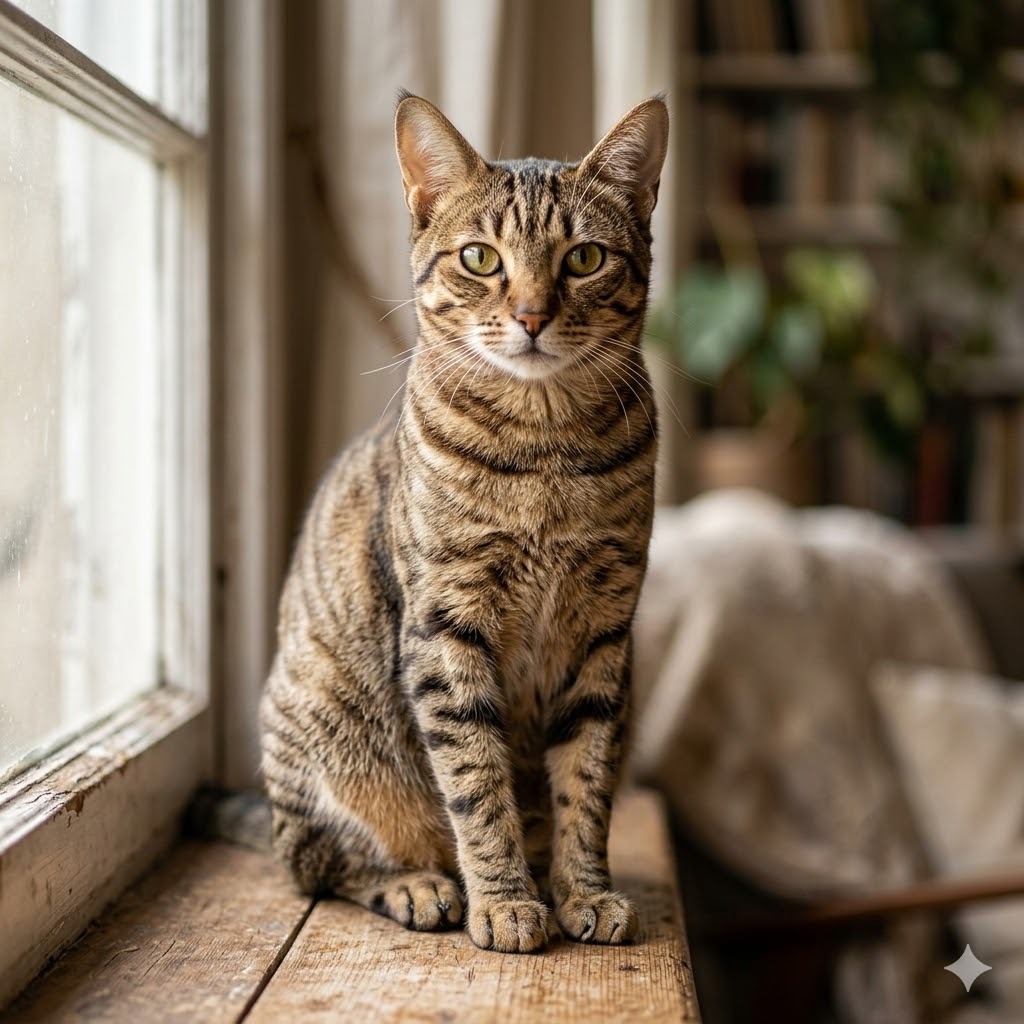
Overview
The Sokoke is a rare natural breed of lean, athletic shorthaired cat originating from the Sokoke forest region of coastal Kenya. Distinguished by its unique ticked-tabby "African tabby" coat and its active, dog-like devotion, it typically weighs 3-5 kg and lives 12-16 years. As one of the world's oldest and rarest natural breeds, it combines a wild forest heritage with a loyal, people-focused temperament.
History & Origins
The Sokoke descends from cats native to the Arabuko-Sokoke forest area on the coast of Kenya, where local Giriama people knew them as "Khadzonzo," meaning something like "looks like tree bark," a reference to the coat's ticked, wood-grain pattern.
In 1978, a Kenyan farmer named Jeni Slater discovered a litter of these distinctive cats on her coastal estate and began keeping them. A Danish visitor, Gloria Moeldrup, later took some of these cats to Denmark, where organised breeding began. A second, unrelated import of feral cats from the same Kenyan region in the 2000s (sometimes called the "old line" and "new line") broadened the gene pool.
Genetic studies suggest the Sokoke is closely related to other coastal Kenyan cats and represents a naturally occurring landrace rather than a designed breed. It gained recognition from FIFe and is recognised by TICA, but it remains one of the rarest breeds in the world, with very small numbers of breeders internationally. Its appeal lies in being a genuine natural breed with a documented wild origin.
Appearance
The Sokoke is a medium-sized, elegant, and athletic cat that looks lean and leggy rather than heavy. Males weigh roughly 4-5 kg; females 3-4 kg. Everything about the build suggests agility.
Key features:
- Coat: very short, close-lying, and with little to no undercoat, giving a thin, almost see-through feel against the skin.
- Colour & pattern: the hallmark is a modified "African tabby" - a blotched tabby pattern with heavy agouti ticking that creates a distinctive wood-grain or tree-bark look in shades of brown.
- Head: small in proportion to the body, with a modified wedge shape and slightly rounded muzzle.
- Ears: medium to large, moderately tufted, with a wide base.
- Eyes: large, almond-shaped, ranging from amber to light green, set at a slight slant.
- Legs: long and slim, with the hind legs longer than the front, producing a distinctive tip-toe walk.
- Body: long, lean, and muscular with a graceful outline.
- Tail: medium to long and tapering, often ringed.
Temperament & Character
The Sokoke is active, athletic, and strikingly dog-like in its attachment to people. Owners often describe them as loyal companions that bond deeply, follow their humans everywhere, and greet them with obvious enthusiasm.
The breed is intelligent, alert, and very interactive. Sokokes tend to communicate clearly through body language and voice and are quick to learn routines. Many enjoy fetch, harness walks, and problem-solving toys, reflecting their high intelligence and energy.
Socially, they are generally friendly and outgoing once they trust their household, though their wild-landrace roots can make some individuals reserved with strangers. They form tight family bonds and often dislike being left alone for long stretches.
Physically they are climbers and jumpers with excellent balance, at home high up and always keen to explore. This is an engaged, busy cat rather than a placid one.
Care
Coat & Grooming
The thin, short coat is extremely low maintenance. A weekly wipe with a damp hand or rubber mitt is usually enough to keep it sleek. There is little shedding and virtually no matting.
Because the coat carries little insulation, Sokokes can feel the cold - provide warm, cosy sleeping spots and avoid draughty rooms. Otherwise, standard care applies: check ears, trim claws every couple of weeks, and brush teeth regularly to prevent dental disease.
Exercise & Enrichment
This is an energetic, intelligent breed that needs plenty of activity. Offer tall climbing structures and shelves, daily interactive play with wand toys, and puzzle feeders to engage the mind. Many Sokokes take readily to harness walks and clicker training.
Their strong bond with people means they thrive on shared activity. A bored or under-exercised Sokoke can become restless and vocal, so build regular play into the daily routine.
Health & Lifespan
Average lifespan is 12-16 years.
As a natural breed with a relatively diverse gene pool, the Sokoke is generally hardy with no single dominant breed-specific disease widely documented. Sensible precautions still apply:
- Cold sensitivity - the thin coat offers little warmth; keep them out of the cold.
- Dental disease - as with most cats, routine dental care matters.
- General screening - reputable breeders test breeding cats for common feline conditions and maintain healthy lines given the small population.
Because numbers are so low, buy only from established, health-conscious breeders who manage the limited gene pool responsibly.
Feeding & Nutrition
Adults typically eat 40-70 g of quality cat food per day, adjusted for their small, active frame. Given their lean build and high activity, most Sokokes maintain condition easily, but measured meals remain the best approach.
A high-protein diet suits this athletic, hunting-type cat. Wet food or a wet-and-dry mix supports hydration and urinary health, and fresh water should always be available.
Their fast metabolism and lean build mean they rarely tend toward obesity, but monitor body condition as they age and adjust portions accordingly.
Living With
Litter
Standard provision: one box per cat plus one spare, scooped daily. An uncovered box in a quiet spot suits this alert breed. Low-dust, unscented litter is generally preferred.
Multi-cat households
Sokokes are generally social and can live happily with other cats, particularly active companions that share their energy. Introduce newcomers gradually. Their strong bonds mean company can help prevent loneliness when owners are out.
Indoor vs outdoor
Indoor-only, ideally with a catio or supervised harness walks, is safest. The breed is rare, curious, and agile, and free roaming exposes it to traffic, theft, and predators. Their cold sensitivity also makes them poorly suited to outdoor life in cool climates. Enrichment indoors keeps them content.
Pros & Cons
Pros
- Genuine natural breed with a documented wild origin.
- Loyal, dog-like devotion to its people.
- Striking, unique "African tabby" coat.
- Extremely low grooming needs.
- Generally hardy with a diverse gene pool.
Cons
- Very rare and often expensive/hard to source.
- High energy; needs daily enrichment.
- Cold-sensitive due to the thin coat.
- Can be reserved with strangers.
- Dislikes long periods left alone.
Best Suited For
- Owners who want a loyal, interactive, dog-like cat.
- Active households that can provide daily play and climbing.
- People drawn to rare, natural breeds.
- Homes in warmer climates or with warm indoor spaces.
- Households where the cat is not left alone for long.
Not suited for owners wanting a calm, independent lap cat, homes where the cat is alone all day, or cold, draughty living conditions.
Sokoke - frequently asked questions
Where does the Sokoke come from?
It is a natural breed from the Sokoke forest region on the coast of Kenya, where local people called it "Khadzonzo." It was first developed as a recognised breed in Denmark from Kenyan imports.
Is the Sokoke part wild cat?
No. It is a naturally occurring domestic landrace, not a wild hybrid. Its wild look comes from generations of natural selection in the Kenyan forest, not from wild-cat crossing.
Are Sokokes really dog-like?
Many are. Owners frequently describe strong loyalty, following behaviour, enthusiastic greetings, and a fondness for fetch and harness walks that feel more canine than typical of cats.
Do they need special care because of the thin coat?
Somewhat. The coat offers little insulation, so they appreciate warm sleeping spots and should be kept away from cold and draughts. Grooming itself is minimal.
Are they good for first-time owners?
They can be, for an active, attentive owner. They are healthy and easy to groom but need engagement and company, so they suit people ready to invest time rather than someone wanting a hands-off pet.
🧠 Test yourself: guess the cat
Three clues from our quiz bank, each about another of our cats. Can you name them?
Clue 1.Descended from a single stray with oddly shaped ears found in California in 1981, this breed retains a kitten-like playfulness well into adulthood.
It's the American Curl - read the full profile →
Clue 2.One of the oldest known domestic cat breeds, this ticked-coat feline was named after a former name of Ethiopia, though its true origin likely lies near the Indian Ocean coast.
It's the Abyssinian - read the full profile →
Clue 3.Originally a rich sable brown, this short-coated, golden-eyed breed is famed for being intensely people-oriented and dog-like.
It's the Burmese - read the full profile →
💛 Adoptable Sokokes near you
Real cats of this breed (and close mixes) waiting in shelters and rescues right now, live from Petfinder. We have no affiliation and earn nothing - if someone catches your eye, the link goes straight to their shelter. New to adopting? Start with our adoption guide.
Widget not loading (some ad-blockers hide it)? Search directly on petfinder.com.