Oscar
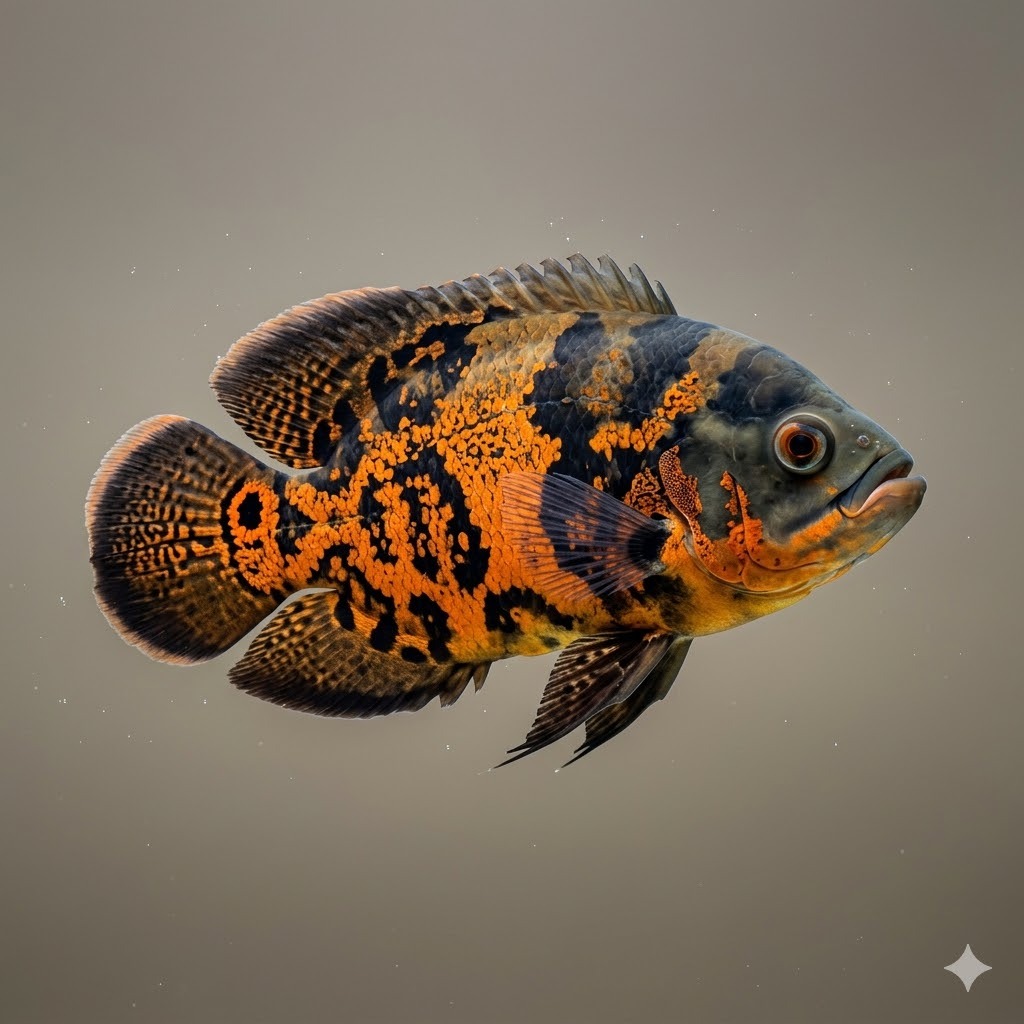
The Oscar (Astronotus ocellatus) is a large, intelligent South American cichlid famous for its almost dog-like personality - it recognises its keeper, begs for food, and rearranges its tank.
🗓️ Last reviewed: June 2026
Overview
The Oscar (Astronotus ocellatus) is a large, intelligent South American cichlid famous for its almost dog-like personality - it recognises its keeper, begs for food, and rearranges its tank. Oscars grow quickly to 30 cm or more, live well over a decade, and produce an enormous amount of waste, making them a serious commitment rather than a casual community fish.
Natural History
Native to the Amazon basin across Brazil, Peru, Colombia, and surrounding countries, where it lives in slow, warm, often murky waters among submerged wood and roots. It is an opportunistic predator and forager. Feral populations are established in warm regions such as Florida. The dark "eyespot" (ocellus) on the tail base helps confuse predators about which end is the head.
Appearance
Adults commonly reach 30-38 cm and 1-1.5 kg. Wild fish are dark olive to grey with orange-red mottling and a ringed eyespot near the tail. Captive colour forms include the red tiger, albino, lemon, and the leucistic white oscar.
Temperament & Tankmates
Bold, curious, and territorial. Oscars are intelligent and interactive but will eat anything that fits in their mouth and may bully or kill smaller tankmates. Many keepers house a single oscar alone.
If kept with others, only large, robust fish in a very big tank are suitable - for example other large cichlids, large plecos, or silver dollars - and even then aggression is common. Never mix with small community fish, which become food.
Tank Size & Setup
Minimum: 285-300 L (75-80 gallon) for a single adult; larger for any tankmates.
Use heavy, oversized filtration to cope with their waste, and secure all equipment - oscars dig, uproot plants, and move decor. Provide smooth large rocks, driftwood, and open swimming space. Anchor or omit plants, as they will be dug up. A tight, weighted lid is essential.
Water Parameters
- Temperature: 23-28°C.
- pH: 6.0-7.5.
- Soft to moderately hard water.
- Ammonia 0, nitrite 0, nitrate <40 ppm with frequent large water changes.
Diet
Carnivore-leaning omnivore. Base the diet on a quality cichlid pellet, supplemented with frozen or fresh shrimp, earthworms, insects, and occasional fish fillet. Offer some plant matter such as peas or vegetables. Avoid feeder goldfish, which bring parasites and excess fat. Feed once or twice daily.
Health & Lifespan
10-15 years.
Common concerns:
- Hole-in-the-head disease (HLLE) - linked to poor water quality, diet, and nutrient deficiency.
- Ammonia/nitrite poisoning from under-filtered or overstocked tanks.
- Ich (white spot).
- Bloat and constipation from over-rich diets.
- Injury from digging into sharp decor.
Pros & Cons
Pros: intelligent and interactive, striking size and colour, long-lived, recognises its owner. Cons: very large adult size; huge waste output; aggressive and predatory; expensive setup and maintenance.
Oscar - frequently asked questions
How big do oscars really get?
30-38 cm, sometimes larger, and they reach most of that size within the first year. This is not a fish for small tanks.
Can I keep an oscar with other fish?
Only with large, robust species in a very big tank, and aggression is still likely. Small fish will be eaten. Many oscars are kept singly.
Why is my oscar developing pits on its head?
That is hole-in-the-head disease, usually tied to poor water quality and diet. Improve water changes, filtration, and nutrition, and consult an aquatic vet.
Do they really have personalities?
Yes. Oscars are among the most interactive aquarium fish - they learn feeding routines, follow their keeper, and rearrange their tank.
🧠 Test yourself: guess the fish
Three clues from our quiz bank, each about another of our fish. Can you name them?
Clue 1.This dazzling Amazonian schooling fish wears a full-length red stripe beneath its blue band, distinguishing it from a similar smaller cousin.
It's the Cardinal Tetra - read the full profile →
Clue 2.Aquarists prize this small loricariid because, unlike its giant relatives, it tops out around five inches and won't outgrow a community tank.
It's the Bristlenose Pleco - read the full profile →
Clue 3.Contrary to popular myth, this hardy pet has a memory spanning months and should never be kept in a tiny bowl.
It's the Goldfish - read the full profile →