Box Turtle
The Box Turtle (Terrapene species) is a small land turtle famous for its long life and its hinged shell, which lets it close up completely like a box.
🗓️ Last reviewed: July 2026
Overview
The Box Turtle (Terrapene species) is a small land turtle famous for its long life and its hinged shell, which lets it close up completely like a box. These are not casual pets - a healthy box turtle can outlive its owner, making it a decades-long, even multi-generational commitment. They do best in a spacious outdoor pen that mimics their natural woodland home, with high humidity and, for many, a proper winter dormancy. Rewarding and characterful, they suit dedicated keepers ready for the long haul. Wild box turtles should never be taken from the wild; captive-bred animals are the responsible choice.
Natural History
Wild range: across the eastern and central United States and into Mexico, in woodlands, meadows, and floodplains. Box turtles are terrestrial - they live on land, not in water - though they soak and stay near moisture. They are most active in the mild, humid parts of the day and shelter from heat and cold. In temperate regions they hibernate through winter, burrowing down below the frost line. They have strong homing instincts and small home ranges, which is one reason removing them from the wild is so harmful.
Appearance
Adults 10-18 cm shell length, a compact and rounded turtle. Males and females differ, often in eye colour and shell shape.
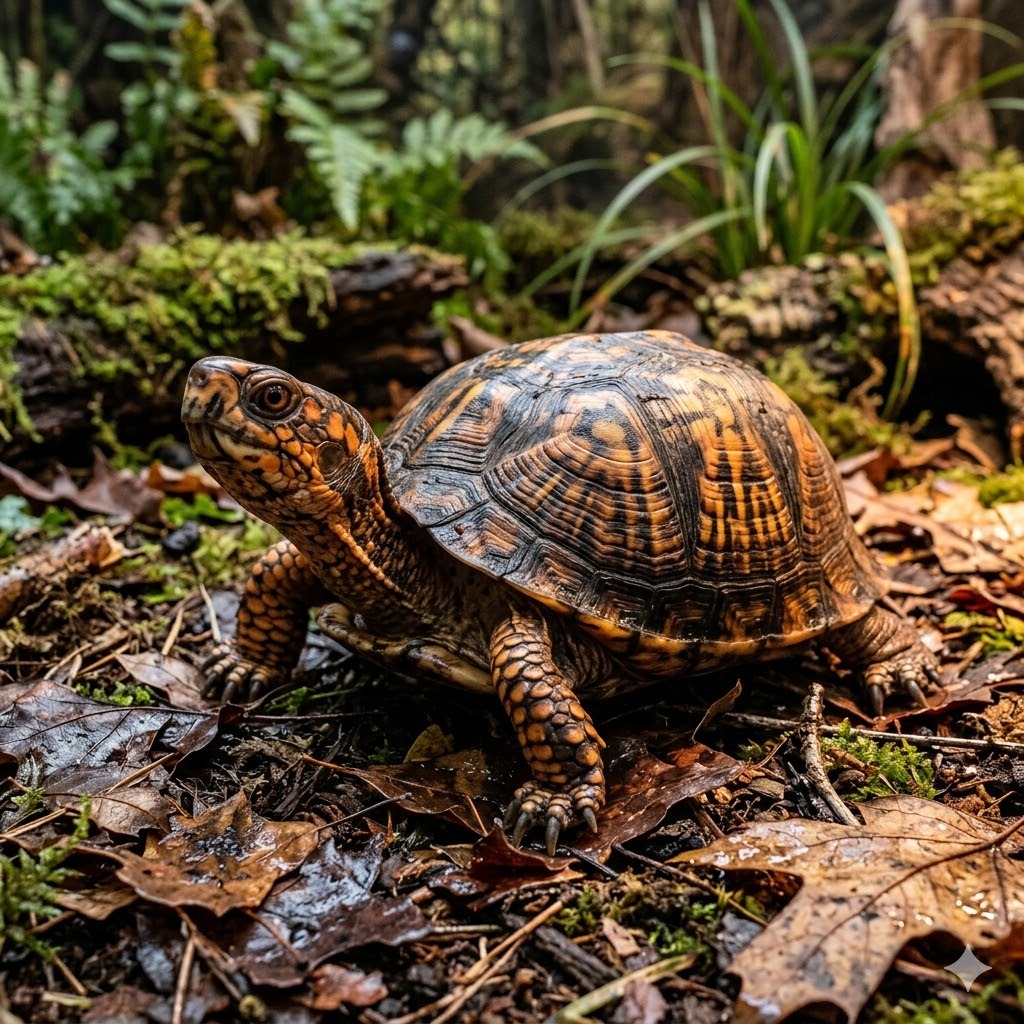
The high-domed carapace is brown to olive, usually marked with yellow, orange, or tan patterns that vary by subspecies and individual. The hinged lower shell (plastron) allows the turtle to seal itself shut for protection. Skin is dark with lighter mottling, and the head and legs can carry bright markings.
Temperament & Handling
Generally calm but not a snake-style "handling" pet. Box turtles tolerate gentle interaction and can become tame enough to feed from the hand, but they are easily stressed by frequent handling and prefer to be observed. Keep handling brief and low, close to the ground, since a fall can crack the shell. They are most content roaming and foraging in a well-planted enclosure. With patience they recognise routine and their keeper.
A stressed box turtle will pull in and clamp its hinged shell shut, and repeated stress of this kind can suppress appetite and weaken the animal over time. Rather than picking the turtle up often, it is better to interact at ground level - offering food, watching it forage, and letting it come to you. Over months and years a well-kept box turtle can grow surprisingly confident with its keeper, but this trust is built slowly. Always wash hands before and after any contact, as turtles can carry bacteria.
Enclosure
Ideally outdoor: a secure, predator-proof outdoor pen is the best home, giving natural light, temperature swings, and space to forage.
For an outdoor pen provide:
- Solid, dug-in walls to stop climbing and digging out.
- Overhead protection from predators.
- Dense planting, hides, and leaf litter.
- A large, shallow water area for soaking.
Indoors, use a large enclosed table rather than a small tank - a minimum footprint of about 120 × 60 cm for one adult, with deep substrate for burrowing, hides, and a shallow water dish. Indoor housing is second best to a proper outdoor pen. Glass tanks are a poor choice: they are usually too small, hold heat and humidity unevenly, and can stress the turtle, which does not understand the invisible walls. Whatever the enclosure, deep, moisture-holding substrate lets the turtle dig and stay comfortable, and the whole space should feel densely planted and secure rather than bare and open.
Heating & Lighting
- Warm basking spot: 29-32°C.
- Cool areas: 21-24°C.
- Night: a natural drop is fine and healthy.
- UVB: essential indoors - a good UVB source is needed for shell and bone health. Outdoors, natural sunlight provides this.
Use a basking bulb and UVB on a thermostat and timer indoors. Outdoors, ensure both sunny and shaded areas.
Humidity
High - around 60-80%. Box turtles need a humid, moist environment to stay healthy; dry conditions cause shell and eye problems. Provide damp substrate, leaf litter, humid hides, and a soaking area, and mist as needed. Many keepers also provide a controlled winter hibernation for healthy adults from hibernating species - a process that must be researched carefully and never forced on a sick or underweight animal.
Diet
Omnivorous. A varied mix is key:
- Animal foods: earthworms, snails, slugs, insects.
- Plant foods: leafy greens, vegetables, and some fruit.
- Offer variety and rotate items; dust with calcium and provide a vitamin supplement as needed.
Feed juveniles daily and adults every 2-3 days, adjusting to appetite and season. A balanced, varied diet with proper calcium is central to preventing shell disease.
Variety is the key to a healthy box turtle. In the wild they eat a shifting mix of live prey, fallen fruit, fungi, and greens as the seasons change, and a captive diet should try to echo that range rather than relying on the same few items. Live prey such as earthworms and snails is important for many individuals, and calcium is essential for building and maintaining the shell. Appetite naturally falls off as the weather cools, especially in turtles that hibernate, so keepers should expect and allow this seasonal slowdown rather than forcing food.
Health & Lifespan
30-50 years, and often longer - some box turtles live well beyond 50.
Common concerns:
- Metabolic bone disease from poor calcium or UVB.
- Shell rot and shell infections from dirty or overly wet conditions.
- Respiratory infections from cold, dry, or damp environments.
- Vitamin A deficiency, causing eye and skin problems.
- Stress and decline in animals taken from the wild.
Pros & Cons
Pros:
- Long-lived and full of character.
- Thrives in a natural outdoor pen.
- Fascinating to observe foraging.
- Hardy when housed correctly.
Cons:
- Decades-long, even lifelong commitment.
- Needs high humidity and often hibernation.
- Best kept outdoors, which not everyone can provide.
- Wild individuals must never be taken.
Best Suited For
- Dedicated keepers ready for a multi-decade commitment.
- Owners with outdoor space for a secure pen.
- People who enjoy observing rather than handling.
Not suited for anyone wanting a short-term pet, a handling-focused reptile, or a purely tank-based indoor animal.
Box Turtle - frequently asked questions
How long do they live?
30-50 years and often longer, sometimes outliving their owner. This is a lifelong commitment.
Can I keep one indoors?
Yes, in a large turtle table with UVB and high humidity - but a secure outdoor pen is far better.
Do they hibernate?
Many healthy adults of hibernating species do. Winter dormancy must be carefully researched and never forced on a sick or underweight turtle.
Can I take one from the wild?
No. Wild box turtles have strong homing instincts and small ranges; removing them harms wild populations. Always choose a captive-bred animal.
How humid should the enclosure be?
High, around 60-80%, with damp substrate, hides, and a soaking area.
🧠 Test yourself: guess the reptile
Three clues from our quiz bank, each about another of our reptiles. Can you name them?
Clue 1.A popular beginner reptile, it thrives without special heat lamps and can live on powdered fruit diets.
It's the Crested Gecko - read the full profile →
Clue 2.Often sold tiny but reaching over five feet, this tree-dwelling herbivore is a far bigger commitment than buyers expect.
It's the Green Iguana - read the full profile →
Clue 3.This basking turtle slides quickly off logs into the water when startled, giving it part of its name.
It's the Red-Eared Slider Turtle - read the full profile →