Greek Tortoise
The Greek Tortoise (Testudo graeca), also called the spur-thighed tortoise, is a small, hardy Mediterranean tortoise and one of the most enduring pet tortoises in the hobby.
🗓️ Last reviewed: July 2026
Overview
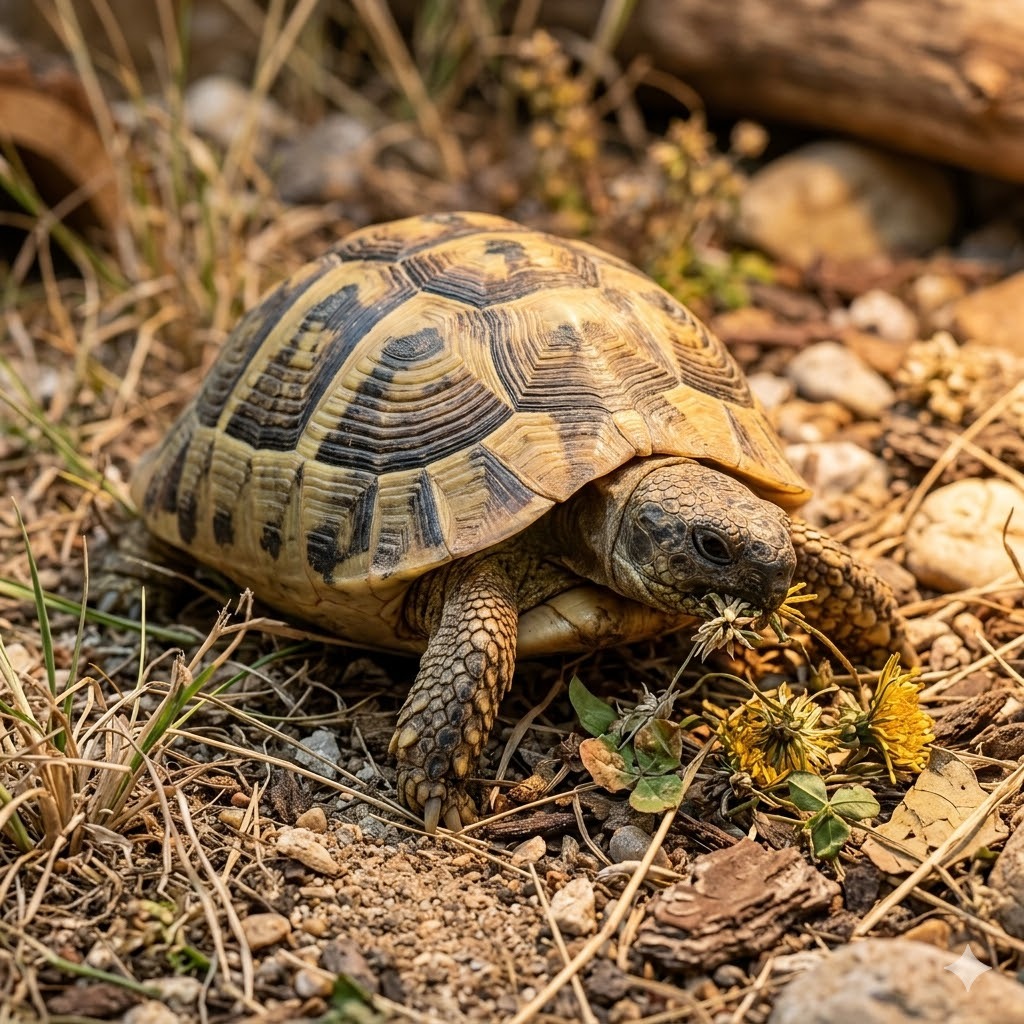
The Greek Tortoise (Testudo graeca), also called the spur-thighed tortoise, is a small, hardy Mediterranean tortoise and one of the most enduring pet tortoises in the hobby. Compact enough to house without a garden the size of a field, gentle by nature, and strictly vegetarian, it suits keepers who want a grazing, ground-dwelling reptile rather than a lizard. What it asks in return is patience and planning, because a Greek Tortoise routinely outlives the person who bought it. This is a companion measured in decades, not years, and that single fact should shape the decision to keep one.
Natural History
The Greek Tortoise ranges across a wide arc of southern Europe, North Africa, and the Middle East, from Spain and the Balkans through Turkey and into the Levant. It inhabits dry, warm scrubland, rocky hillsides, grassy meadows, and open Mediterranean woodland. Diurnal and most active in the cooler parts of warm days, it grazes on low vegetation and shelters from the midday sun. In the wild many populations brumate (a reptile form of hibernation) through the cold months, an instinct that persists in captive animals and must be understood by any keeper. Small horny spurs on the thighs give the species its "spur-thighed" name.
Appearance
Adults typically reach 15-25 cm shell length depending on the subspecies, with females usually larger than males. Weight ranges roughly from 1 to 3 kg in mature animals. The carapace is domed and rounded, patterned in yellow, tan, and brown with dark blotches on each scute. The head and legs are yellowish to olive, and the namesake conical spurs sit on each thigh. Males tend to have longer tails and a slightly concave plastron. Growth is slow and steady, and shell shape and smoothness are good indicators of correct diet and humidity during rearing.
Temperament & Handling
Greek Tortoises are calm, undemanding, and non-aggressive. They are among the more forgiving tortoises to keep, tolerating gentle interaction without stress, though like all tortoises they prefer life on the ground to being carried. Lift them low and level, supporting the whole shell, and keep handling brief - being raised into the air is unnatural and unsettling for a ground animal. They are not social in the way a dog or parrot is, but individuals become familiar with feeding routines and will approach a keeper who brings food. Males can be pushy toward other tortoises, so housing is often best done singly or with care.
Enclosure
Minimum: a floor-space tortoise table or enclosure of at least 120 × 60 cm for one adult, with more space always better; outdoor grazing pens are excellent in suitable climates.
Provide:
- A warm, dry, well-ventilated setup - open tortoise tables are usually preferred over glass tanks, which trap stale humid air.
- A substrate mix such as topsoil and play sand, or a soil-based tortoise substrate, deep enough for light digging.
- A cooler, shaded hide and a warm basking zone at opposite ends.
- Rocks, logs, and edible planting for enrichment and shade.
- A shallow water dish for drinking and soaking.
- Secure walls and, outdoors, a dig-proof, escape-proof perimeter with protection from predators.
Heating & Lighting
- Basking spot: 32-35°C directly under the lamp.
- Warm ambient end: 26-30°C.
- Cool end: around 20-24°C, allowing a clear gradient.
- Night: can drop to normal room temperature in most homes; supplemental night heat is rarely needed.
- UVB: essential. A quality UVB source across the basking area drives vitamin D3 production and calcium use; natural unfiltered sunlight outdoors is ideal when weather allows.
Provide a genuine warm-to-cool gradient so the tortoise can thermoregulate by moving between zones.
Humidity
Greek Tortoises come from warm, dry regions, so ambient humidity should stay moderate to low, generally around 40-50%, with good airflow to prevent stale damp conditions. Hatchlings and juveniles benefit from a slightly more humid hide and regular soaking to support smooth shell growth and hydration, while adults do well kept drier. Provide a shallow water dish and soak young tortoises in shallow warm water a few times weekly.
Diet
Herbivorous grazer. A Greek Tortoise thrives on a high-fibre, low-protein plant diet:
- Staple: a wide variety of weeds and leafy greens - dandelion, plantain, clover, sow thistle, mallow, and mixed edible garden weeds.
- Occasional: small amounts of other leafy greens and grasses.
- Avoid: fruit (only rare tiny amounts), high-protein foods, dog or cat food, and most supermarket vegetables as a staple.
The diet should be grassy, weedy, fibrous, and varied, not soft and sugary. Dust food with a calcium supplement regularly and offer a cuttlebone for free-choice calcium. Overfeeding rich foods causes lumpy, pyramided shells and health problems. Growing a good weed patch or letting the tortoise graze on untreated lawn and wild plants is one of the simplest ways to keep the diet natural and appropriate across the seasons.
Health & Lifespan
50 years or more, with many individuals reaching well beyond that - a genuine multi-decade, potentially lifelong commitment.
Common concerns:
- Metabolic bone disease from inadequate UVB or calcium.
- Shell pyramiding from poor diet and humidity during growth.
- Respiratory infections from cold, damp conditions.
- Parasites, especially in imported animals.
- Bladder stones from dehydration and improper diet.
- Complications from incorrect brumation if hibernation is attempted without preparation.
Pros & Cons
Pros:
- Small, manageable size for a tortoise.
- Calm and easy-going temperament.
- Simple vegetarian diet based on weeds.
- Can graze outdoors in suitable climates.
- Extremely long-lived companion.
Cons:
- Decades-long, often lifetime commitment.
- Needs strong UVB and a proper warm dry setup.
- Brumation adds complexity for many keepers.
- Not a handling or cuddling pet.
- Susceptible to shell and metabolic problems if care is wrong.
Best Suited For
- Keepers wanting a small, hardy grazing tortoise.
- Owners able to plan for a 50-year-plus commitment.
- People with access to weeds, greens, and ideally some outdoor grazing.
Not suited for anyone seeking a low-commitment or short-lived pet, or unable to provide proper UVB, heat, and a dry environment.
Greek Tortoise - frequently asked questions
How long do they live?
50 years or more, often outliving the owner. This should be a planned, long-term decision.
Do I need to hibernate my tortoise?
Many Greek Tortoises brumate naturally, but it must be done carefully with a healthy animal and proper preparation. When in doubt, keep the tortoise warm and active and consult an experienced reptile vet.
What should they eat?
A varied diet of weeds and leafy greens - dandelion, plantain, clover, and similar - high in fibre and calcium, low in protein and sugar. Fruit should be a rare treat at most.
Do they need UVB?
Yes. UVB is essential for calcium metabolism and shell health, or unfiltered natural sunlight when outdoors.
Are they good for beginners?
They are among the more forgiving tortoises, but the very long lifespan and specific heat, UVB, and diet needs mean they suit committed, prepared keepers.
🧠 Test yourself: guess the reptile
Three clues from our quiz bank, each about another of our reptiles. Can you name them?
Clue 1.This popular aquatic pet turtle is named for the bright reddish stripe behind each eye.
It's the Red-Eared Slider Turtle - read the full profile →
Clue 2.A heavy-bodied, short-legged reptile, this docile lizard gives birth to live young rather than laying eggs, and makes a calm omnivorous pet.
It's the Blue-Tongue Skink - read the full profile →
Clue 3.A popular beginner reptile, it thrives without special heat lamps and can live on powdered fruit diets.
It's the Crested Gecko - read the full profile →