Rainbow Lorikeet
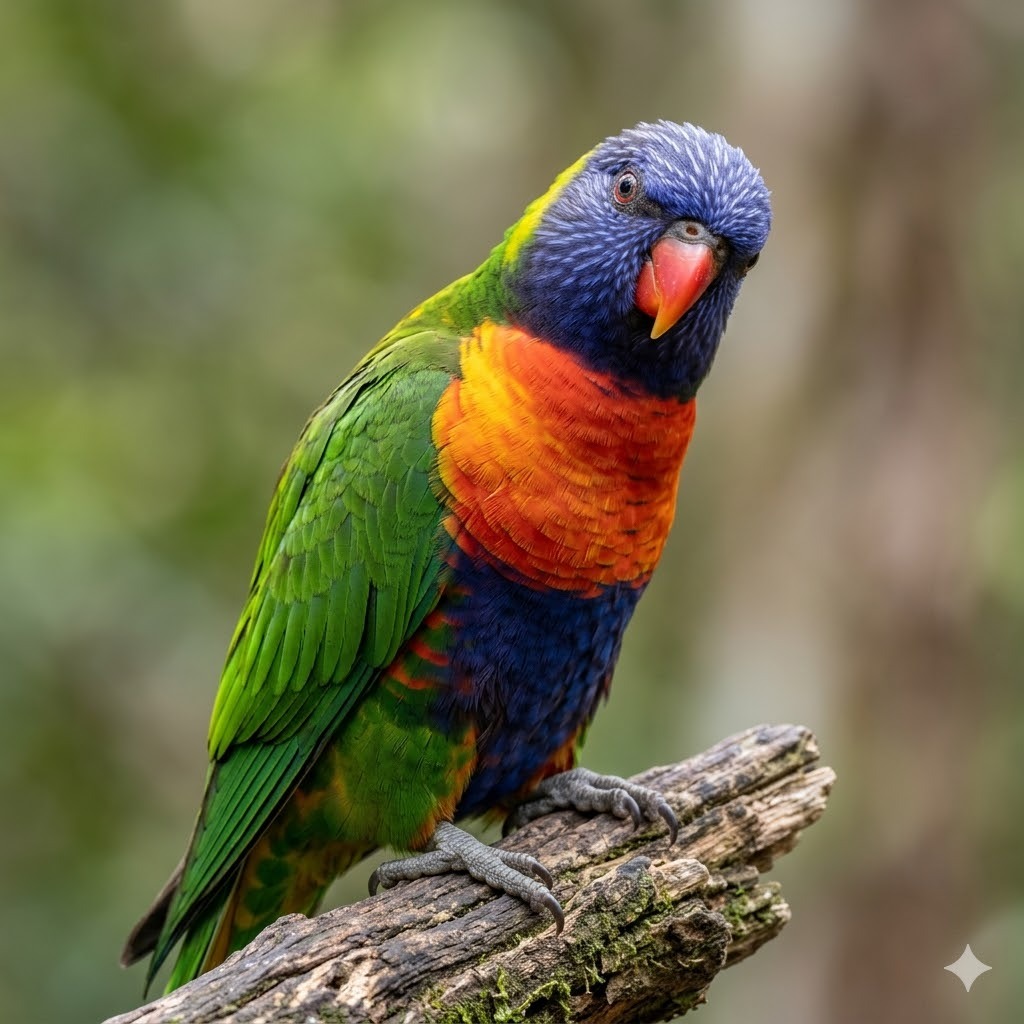
The rainbow lorikeet is one of the most vividly coloured parrots on earth - a living paintbox of blue, green, orange, yellow, and red.
🗓️ Last reviewed: July 2026
Overview
The rainbow lorikeet is one of the most vividly coloured parrots on earth - a living paintbox of blue, green, orange, yellow, and red. It is also a nectar-feeding specialist, which sets it apart from almost every other pet parrot and makes it a very particular commitment. Lorikeets are clownish, acrobatic, endlessly playful, and bursting with energy, but they come with two big honest realities: they need a special wet nectar and pollen diet, and that liquid diet produces frequent, squirting, messy droppings. For an owner who adores an interactive, comedic, dazzling bird and can handle the mess and the specialised feeding, the rainbow lorikeet is unforgettable. For a tidy household, it is a poor match.
Natural History & Origin
Rainbow lorikeets are native to the coastal regions of eastern and northern Australia, as well as parts of Indonesia and nearby islands, where they range through rainforest, woodland, and suburban gardens. In the wild they travel in noisy, fast-moving flocks, following the flowering of trees. Their tongues have a specialised brush-like tip designed to lap nectar and pollen from blossoms, which is the key to understanding everything about them in captivity. They are common and bold in their native range, often descending on flowering gardens in screeching, tumbling groups, and they have long been popular in aviculture for their colour and character.
Appearance
Adults measure around 25-30 cm in length and weigh roughly 100-160 g. There is no mistaking a rainbow lorikeet: a deep blue head, a bright green back and wings, a scarlet-orange chest often barred with darker markings, a yellow-orange side patch, and a red-orange beak. The colours are glossy and saturated, blending in a way that genuinely resembles a rainbow. The body is compact and streamlined for fast flight, and the specialised brush-tipped tongue - though hidden - is the anatomical signature of the nectar feeder. Both sexes look alike.
Temperament & Noise
Lorikeets are among the most entertaining of all parrots: bold, acrobatic, curious, and comical. They hang upside down, wrestle with toys, bathe with abandon, and bond intensely with their people. Hand-raised lorikeets can be extremely affectionate and interactive. But they are also loud - genuinely loud - with piercing screeches and constant chatter, especially at dawn and dusk. This is not a quiet-apartment bird. They can also be nippy and territorial when hormonal. In short, they are high-energy, high-volume, high-interaction birds, wonderful for the right person and overwhelming for the wrong one.
Housing & Flight
Lorikeets are fast, active fliers that need generous space. A large flight cage or aviary is essential, ideally long enough for real flight, and easy to clean given the liquid droppings. Position the enclosure where wall spatter from their projectile droppings can be wiped down easily.
Provide:
- Long flight space with natural wood perches at varied heights.
- Plenty of chew toys, swings, and foraging puzzles - they are very playful.
- Frequent bathing opportunities; lorikeets love water.
- Easy-clean surfaces and washable surroundings, since mess is unavoidable.
- Daily out-of-cage time in a bird-safe room for exercise and interaction.
Diet
- Commercial lorikeet nectar (wet and dry mixes) formulated specifically for nectar feeders - this is the dietary base and is not optional.
- Fresh fruit - such as apple, pear, melon, and berries, which they relish.
- Some vegetables and edible flowers or blossoms for variety.
- Pollen-based supplements as part of proper lorikeet formulas.
- Fresh water always available.
Avoid: avocado (toxic to all birds), chocolate, caffeine, alcohol, onion, and salt. Do not feed a standard seed-parrot diet - lorikeets are not designed for it. The wet nectar diet is the direct cause of their frequent, liquid, and often squirting droppings, so honest expectation-setting matters: this is a messy bird by nature, and no amount of training changes that.
Health & Lifespan
Rainbow lorikeets typically live 15-20 years or more with good care.
Common concerns:
- Iron storage and diet imbalances if fed inappropriate foods; stick to proper nectar formulas.
- Bacterial and fungal infections linked to the wet diet and spoiled nectar, so freshen food often.
- Obesity from too much high-sugar fruit.
- Feather and beak disease including psittacine beak and feather disease.
- Sensitivity to fumes - Teflon, aerosols, and smoke are lethal to all birds.
Because the nectar diet spoils quickly, dishes must be cleaned and refreshed at least twice daily. Find an avian vet experienced with lorikeets before acquisition.
Training & Enrichment
Bright and quick to learn, lorikeets take readily to target training, step-up, and simple tricks, and their playful nature makes training genuinely fun. Some learn to mimic words and sounds, though clarity varies. Enrichment is essential given their energy: rotate chew toys, foraging puzzles, swings, and shreddable material, and offer frequent baths. A bored lorikeet becomes a loud, destructive lorikeet, so keeping their busy minds occupied is central to good welfare.
Pros & Cons
Pros:
- Spectacular rainbow colours.
- Playful, acrobatic, and highly interactive.
- Affectionate with their people when hand-raised.
- Intelligent and trainable.
- Long-lived with good care.
Cons:
- Requires a special wet nectar and pollen diet - not a seed bird.
- Very messy - frequent liquid, squirting droppings.
- Loud, with piercing screeches - poor apartment fit.
- Nectar spoils fast; dishes need cleaning twice daily.
- Can be nippy and territorial when hormonal.
Best Suited For
- Experienced or dedicated owners who want a vivid, interactive parrot.
- Households that can handle constant mess and easy-clean setups.
- Homes tolerant of a loud bird.
- Owners committed to the specialised nectar diet.
Not suited for tidy or apartment-noise-sensitive households, first-time owners wanting an easy bird, or homes with non-stick cookware in active use, smokers in the same room, or no tolerance for liquid droppings on walls and floors.
Rainbow Lorikeet - frequently asked questions
Why are lorikeets so messy?
Their natural diet is liquid nectar and pollen, so their droppings are frequent, wet, and often squirting. This is normal and unavoidable, not a sign of illness.
Can I feed them seed like other parrots?
No. Lorikeets are nectar specialists and need a proper commercial lorikeet nectar diet plus fruit. A seed diet is wrong for them.
Are they loud?
Yes - genuinely loud, with piercing screeches especially at dawn and dusk. They are not a good fit for noise-sensitive apartments.
How long do they live?
Usually 15-20 years or more with good care.
Are they good pets?
For the right owner, wonderfully so - playful, affectionate, and dazzling. But only if you can manage the diet, the mess, and the noise.
🧠 Test yourself: guess the bird
Three clues from our quiz bank, each about another of our birds. Can you name them?
Clue 1.Famed for extreme intelligence, loud screams, and intense bonding, members of this group can outlive their owners and pluck feathers when bored.
It's the Cockatoo - read the full profile →
Clue 2.One brilliant orange-and-yellow species in this group is now endangered in the wild despite being common in captivity.
It's the Conure - read the full profile →
Clue 3.This small Australian grass parakeet, wild-colored green and yellow with black scalloping, is the world's most popular pet bird.
It's the Budgerigar (Budgie) - read the full profile →
Social Needs
Lorikeets are intensely social and form strong bonds - with a mate or with their human. A single lorikeet needs a great deal of daily interaction to stay happy, while a bonded pair keeps each other company but may bond less to people. They can be territorial and should be introduced to other birds carefully. Whichever route you choose, this is not a bird to leave alone and ignore; they crave engagement and become frustrated and noisy without it.