Red-Rumped Parakeet
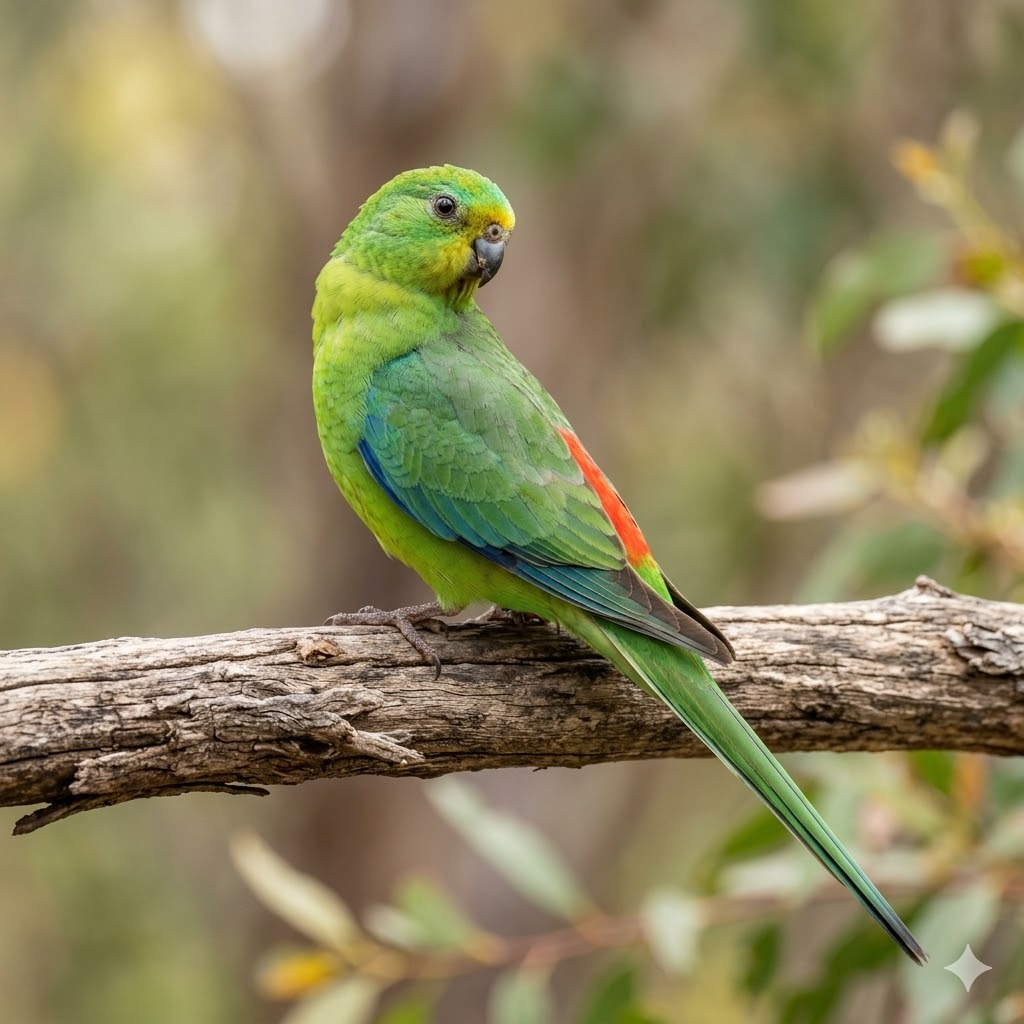
The red-rumped parakeet is one of the most elegant of the Australian grass parakeets kept in aviculture.
🗓️ Last reviewed: July 2026
Overview
The red-rumped parakeet is one of the most elegant of the Australian grass parakeets kept in aviculture. Slim, graceful, and softly coloured, it is prized less as a hands-on companion parrot and more as a beautiful, peaceful aviary bird with a genuinely pleasant song. Where many parrots screech, the red-rump warbles - a series of gentle, musical notes that make it a favourite among people who want the colour and charm of a parrot without the noise. Gentle by nature and undemanding once settled, it suits the aviculturist or garden-aviary keeper more than the person seeking a shoulder pet.
Natural History & Origin
Red-rumped parakeets are native to south-eastern Australia, where they range across open grasslands, farmland, lightly wooded plains, and roadsides along the Murray-Darling basin. They are ground-feeding grass parakeets, spending much of the day walking through low vegetation searching for seeds. They live in pairs and small loose flocks and are one of the more common parakeets across their native range. Captive breeding has been established for well over a century, and the species is now thoroughly domesticated in aviculture, with several colour mutations available.
Appearance
Adults measure roughly 27-28 cm in length including the long slender tail, and weigh around 55-70 g. The species is strongly sexually dimorphic, which makes pairing easy. The male is brilliant: emerald to grass-green over the head and body, a bright yellow belly, blue-tinged wings and shoulders, and the diagnostic brick-red patch across the rump that gives the bird its name. The female is far plainer - a soft olive-grey-green overall with duller markings and no red rump - which serves as camouflage on the nest. Mutations including yellow (lutino-type), blue, and cinnamon exist in captivity.
Temperament & Noise
Peaceful, gentle, and calm, the red-rumped parakeet is not a cuddly bird and generally does not seek human handling. It is happiest observing from within its flight, and even hand-raised birds tend to stay somewhat aloof and flighty rather than becoming lap tame. Sudden movements or a nervous new bird can trigger fast, panicky flight, so a settled, unhurried setting suits them best. What it offers instead is one of the loveliest voices in aviculture: a soft, rolling, warbling song, delivered by the male, that is pleasant rather than piercing. Volume is low - a real advantage for those with neighbours, and a stark contrast to the harsh screech of many parrots. During the breeding season males can become territorial toward other birds, but toward people they remain quiet and mild-mannered throughout the year.
Housing & Flight
This is an aviary species first and foremost. A planted or open flight of at least 2-3 m in length lets these active, ground-foraging birds fly properly and forage naturally.
Provide:
- A long horizontal flight rather than a tall narrow one - red-rumps fly fast and low.
- Natural branch perches at varied heights and a section of floor or ground foraging area.
- Protection from cold, damp, and draughts; a dry sheltered roosting section.
- One pair per flight during breeding, as males can be aggressive to rivals.
- Foraging opportunities on the aviary floor, where the birds naturally spend time.
They can be kept in a large indoor flight cage, but a true aviary suits them best.
Diet
- Quality small-parrot or grass-parakeet seed mix as a base (canary seed, millets, small sunflower in moderation).
- Pellets offered alongside seed to round out nutrition.
- Daily fresh greens and vegetables - seeding grasses, leafy greens, spinach, silverbeet, carrot, and chickweed are favourites.
- Sprouted and soaked seed, especially valued during breeding.
- Cuttlebone and grit/mineral block for calcium.
Avoid: avocado (toxic to all birds), chocolate, caffeine, alcohol, onion, and salt.
Health & Lifespan
Red-rumped parakeets typically live 10-15 years, with well-kept birds sometimes reaching the upper end of that range.
Common concerns:
- Intestinal worms and parasites - a notable risk because they forage on the ground; regular worming and clean flooring matter.
- Coccidiosis, again linked to ground feeding in damp conditions.
- Respiratory infections from cold, damp, or draughty housing.
- Obesity from too much high-fat seed.
- Egg binding in breeding females lacking calcium.
Find an avian vet before acquisition, and prioritise dry, clean housing and a worming routine.
Training & Enrichment
This is not a trick-training parrot. While intelligent, red-rumps rarely become tame enough for step-up or handling work, and pushing for it usually stresses the bird. Patient owners who sit quietly nearby over weeks may earn a degree of calm acceptance, but true taming is uncommon and should not be the goal. Enrichment is better aimed at natural behaviour: floor foraging, seeding grasses to work through, fresh branches to chew, and space to fly at speed. A pair engaged in courtship and nest activity will display fascinating natural behaviour for the observer, from the male's warbling display to careful nest inspection.
Pros & Cons
Pros:
- Quiet, with a genuinely pleasant warbling song.
- Beautiful, elegant plumage; easy to sex.
- Peaceful and undemanding once settled.
- Hardy and long-lived in good conditions.
- Excellent aviary bird for neighbours-conscious keepers.
Cons:
- Not a hands-on or cuddly pet; stays flighty.
- Needs a proper aviary or large flight, not a small cage.
- Prone to worms from ground foraging - needs a worming routine.
- Breeding males can be aggressive to other birds.
- Sensitive to cold and damp housing.
Best Suited For
- Aviculturists and garden-aviary keepers.
- People who want a beautiful, quiet bird to observe rather than handle.
- Neighbours-conscious households wanting a low-noise parrot.
- Keepers able to provide a long flight and a worming routine.
Not suited for anyone seeking a tame shoulder or lap bird, apartment-only setups with no room for a flight, or keepers unwilling to manage ground-foraging parasite risk.
Red-Rumped Parakeet - frequently asked questions
Are red-rumped parakeets tame?
Not usually. Even hand-raised birds tend to stay flighty and prefer observation to handling. They are aviary birds, not cuddle pets.
Are they noisy?
No - one of their best traits. The male sings a soft, pleasant warble at low volume, with no harsh screeching.
Can I tell males from females?
Easily. Males are bright green with a yellow belly and red rump; females are a plain olive-grey-green.
How long do they live?
Usually 10-15 years with good, dry housing and a worming routine.
Can I keep them with other birds?
Yes, in a large aviary with other calm species outside breeding, but breeding males can turn aggressive and should have their own flight.
🧠 Test yourself: guess the bird
Three clues from our quiz bank, each about another of our birds. Can you name them?
Clue 1.Among the tiniest parrots kept as pets, this short-tailed bird is bold and feisty despite its affectionate name.
It's the Lovebird - read the full profile →
Clue 2.Highly social and prone to boredom, this long-lived ash-feathered parrot can pluck out its own plumage if left without mental stimulation.
It's the African Grey Parrot - read the full profile →
Clue 3.Capable of mimicking human speech, this nomadic seed-eater forms vast flocks in the arid outback and breeds after rain.
It's the Budgerigar (Budgie) - read the full profile →
Social Needs
Red-rumps are social with their own kind but not needy of human company. They do best kept as a true pair or in a colony of compatible birds in a spacious aviary. A single bird will be content in a good flight provided it has enrichment, but a pair is more natural. They mix reasonably with other calm species in a large planted aviary outside the breeding season, though breeding males should be given their own flight to avoid squabbles.