Rosella
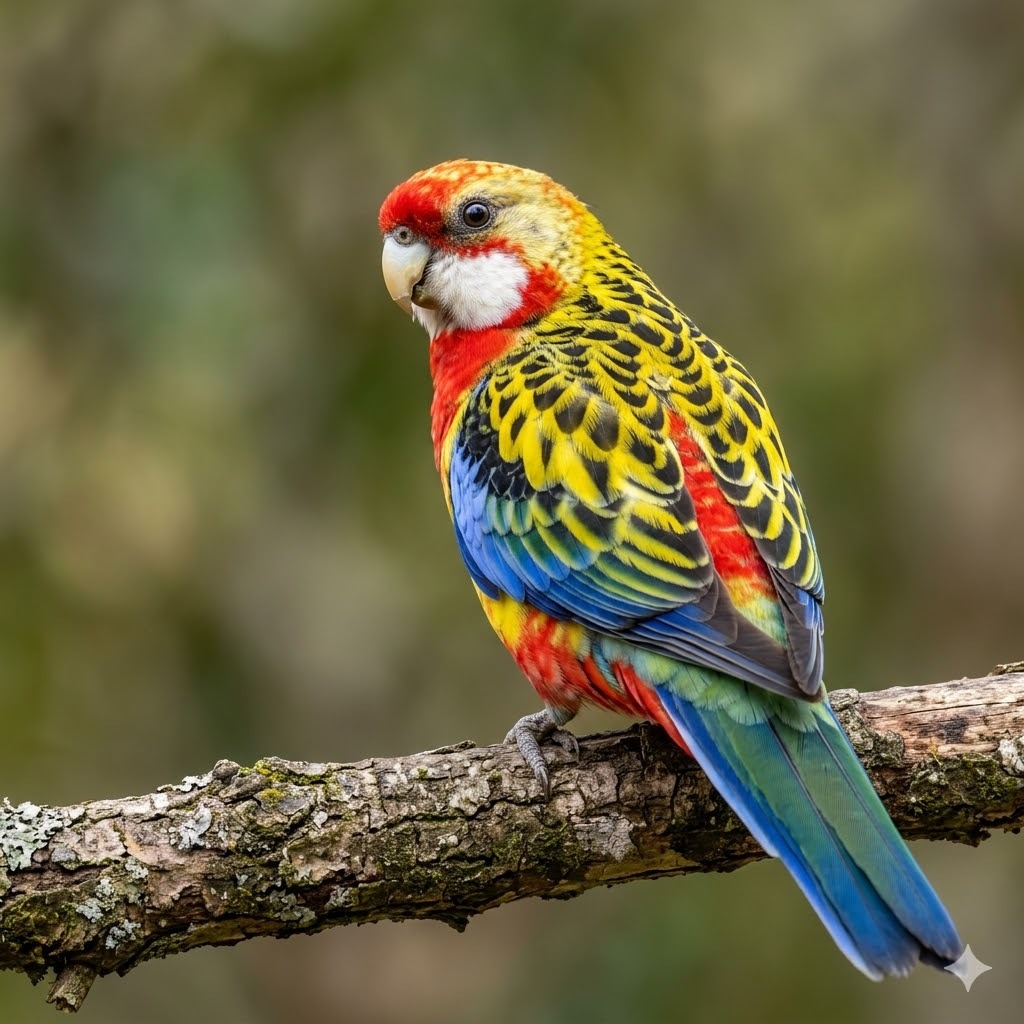
The rosella is one of the most beautiful parrots kept in captivity - a medium-sized Australian broad-tailed parakeet whose plumage looks like it was painted in mosaic.
🗓️ Last reviewed: July 2026
Overview
The rosella is one of the most beautiful parrots kept in captivity - a medium-sized Australian broad-tailed parakeet whose plumage looks like it was painted in mosaic. There are several species (eastern, crimson, pale-headed, western, and more), all sharing the same striking scalloped back pattern and long sweeping tail. Rosellas are prized for their looks and their lively, athletic presence rather than for cuddling. They are more of a "look than touch" bird - active, flighty, and happiest observing you from a large flight aviary rather than sitting on your shoulder. For keepers who value a stunning, animated aviary bird over a hands-on lap parrot, the rosella is hard to beat.
Natural History & Origin
Rosellas are native to Australia and some nearby islands, where they inhabit open woodland, forest edges, farmland, and suburban parks. They forage mostly on the ground and in low shrubs for seeds, fruits, and blossoms, moving in pairs or small groups. The various species occupy different regions of the continent, from the eastern seaboard to the cooler south and west. They have been kept and bred in aviculture for well over a century and are now firmly established as one of the classic aviary parakeets worldwide, though they remain far more a bird for the flight cage than the living room.
Appearance
Adults measure roughly 30-36 cm in length including the long tail, and weigh around 90-120 g depending on species. Rosellas are unmistakable: the back and wing feathers are boldly scalloped in a mosaic of black centres edged with a contrasting colour, and the cheeks carry vivid white or blue patches. The eastern rosella shows a red head and breast, yellow belly, and blue-shouldered wings; the crimson rosella is deep scarlet with blue cheeks and tail; the pale-headed rosella has a soft creamy-yellow head. The long, broad, tapering tail is a defining feature and gives the group its "broad-tailed parakeet" name.
Temperament & Noise
Rosellas are active, curious, and somewhat independent. Most are not naturally cuddly and can be nippy if pushed into handling they did not ask for, so they suit keepers who enjoy watching lively behaviour more than constant physical contact. Hand-raised birds can become tame and will step up, but even these tend to stay busier and more flighty than a budgie or cockatiel. Noise is moderate - a pleasant mix of mellow whistles, chattering, and metallic contact calls, with occasional louder bursts. They are far quieter than a lorikeet or a large parrot, which makes them tolerable for many homes, though they are not silent.
Housing & Flight
Rosellas are strong, energetic fliers that need room to move, so a large flight aviary or a very long flight cage is essential. A single bird or pair should have an aviary at least 2-3 metres long so they can actually fly rather than just flutter. Cramped cages lead to frustration, feather issues, and stress.
Provide:
- Plenty of natural wood perches of varied thickness, arranged to allow clear flight paths.
- Foraging toys and fresh browse - branches, seeding grasses, and chewable material.
- A shallow bath or misting; rosellas love to bathe.
- Shelter from wind and wet if kept outdoors, as they dislike cold damp conditions.
- Space away from more aggressive parrots, as rosellas can be territorial with their own kind.
Diet
- Quality parrakeet or small-parrot pellets as a base for balanced nutrition.
- A good seed mix as a supplement rather than the whole diet.
- Daily fresh vegetables and leafy greens - such as silverbeet, broccoli, and carrot.
- Some fruit and native blossoms or seeding grasses as enrichment and treats.
- Cuttlebone or a mineral block for calcium.
Avoid: avocado (toxic to all birds), chocolate, caffeine, alcohol, onion, and salt. Because rosellas forage on the ground in the wild, scattering some food to encourage natural foraging is good enrichment, but keep it clean to avoid disease.
Health & Lifespan
Rosellas typically live 15-20 years with good care, and some reach their mid-twenties.
Common concerns:
- Intestinal worms and parasites - especially in ground-foraging aviary birds, so regular worming and clean substrate matter.
- Fungal and respiratory infections from damp housing.
- Feather and beak disorders including psittacine beak and feather disease.
- Obesity from an all-seed diet.
- Sensitivity to fumes - Teflon, aerosols, and smoke are dangerous to all birds.
Find an avian vet experienced with parrots before acquisition.
Training & Enrichment
Rosellas are intelligent and can learn to step up and target with patience, and some become quite tame, but they are less inclined to perform tricks or talk than parrots bred for companionship. Enrichment is where they shine: give them things to chew, forage, and explore. Fresh branches, foraging trays, seeding grasses, and rotating toys keep their busy minds occupied. Talking ability is limited - a few may mimic simple whistles, but they are not known as talkers.
Pros & Cons
Pros:
- Spectacular mosaic plumage - one of the most beautiful parakeets.
- Moderate, generally tolerable noise level.
- Hardy and long-lived with good care.
- Active and fascinating to watch.
- Well-suited to aviary life.
Cons:
- Not a cuddly hands-on pet; more look-than-touch.
- Needs a large flight aviary, not a small cage.
- Can be nippy and territorial, especially with other birds.
- Prone to worms as ground foragers.
- Limited talking or trick ability.
Best Suited For
- Keepers who want a stunning aviary bird to watch rather than cuddle.
- People able to provide a large flight aviary or long flight cage.
- Owners who enjoy active, independent birds.
- Those wanting a hardy, long-lived parakeet.
Not suited for anyone wanting a cuddly shoulder parrot, homes with only a small cage, or households with non-stick cookware in active use, smokers in the same room, or damp cold housing.
Rosella - frequently asked questions
Are rosellas cuddly?
Generally no. They are more look-than-touch birds - active and flighty, happiest observed rather than handled. Hand-raised birds can be tamer but rarely become true lap parrots.
Are they noisy?
Moderately. Pleasant whistles and chatter with occasional louder calls, but far quieter than lorikeets or large parrots.
Can they live in a normal cage?
Not comfortably. They need a large flight aviary or a very long flight cage - at least 2-3 metres - to fly properly.
How long do they live?
Usually 15-20 years, sometimes into the mid-twenties with excellent care.
Can I keep two pairs together?
Rarely without conflict. Rosellas can be territorial with their own kind, so one pair per aviary is safest.
🧠 Test yourself: guess the bird
Three clues from our quiz bank, each about another of our birds. Can you name them?
Clue 1.This small grey Australian parrot, the smallest member of its crested family, sports orange cheek patches and a jaunty head crest.
It's the Cockatiel - read the full profile →
Clue 2.Bred for centuries into 'song', 'color', and 'type' varieties, this seed-eater can be yellow, orange, white, or even reddish.
It's the Canary - read the full profile →
Clue 3.This tiny aviary bird has a short, conical, cone-shaped bill perfectly built for cracking small seeds.
It's the Finch (Zebra & Society) - read the full profile →
Social Needs
Rosellas are social with their own kind at a distance but can be territorial and even aggressive toward other rosellas or smaller birds, particularly during breeding. A bonded pair usually does well together in a spacious aviary, but crowding multiple pairs into one enclosure often leads to fighting. Toward people, they are more companionable observers than lap birds; a hand-raised rosella may enjoy interaction, but many are content to live as a stunning aviary pair with human company nearby rather than constant handling.