Spice Finch (Nutmeg Mannikin)
The spice finch - also called the nutmeg mannikin or scaly-breasted munia - is a small, hardy, and thoroughly undemanding finch that has been kept in aviculture for centuries.
🗓️ Last reviewed: July 2026
Overview
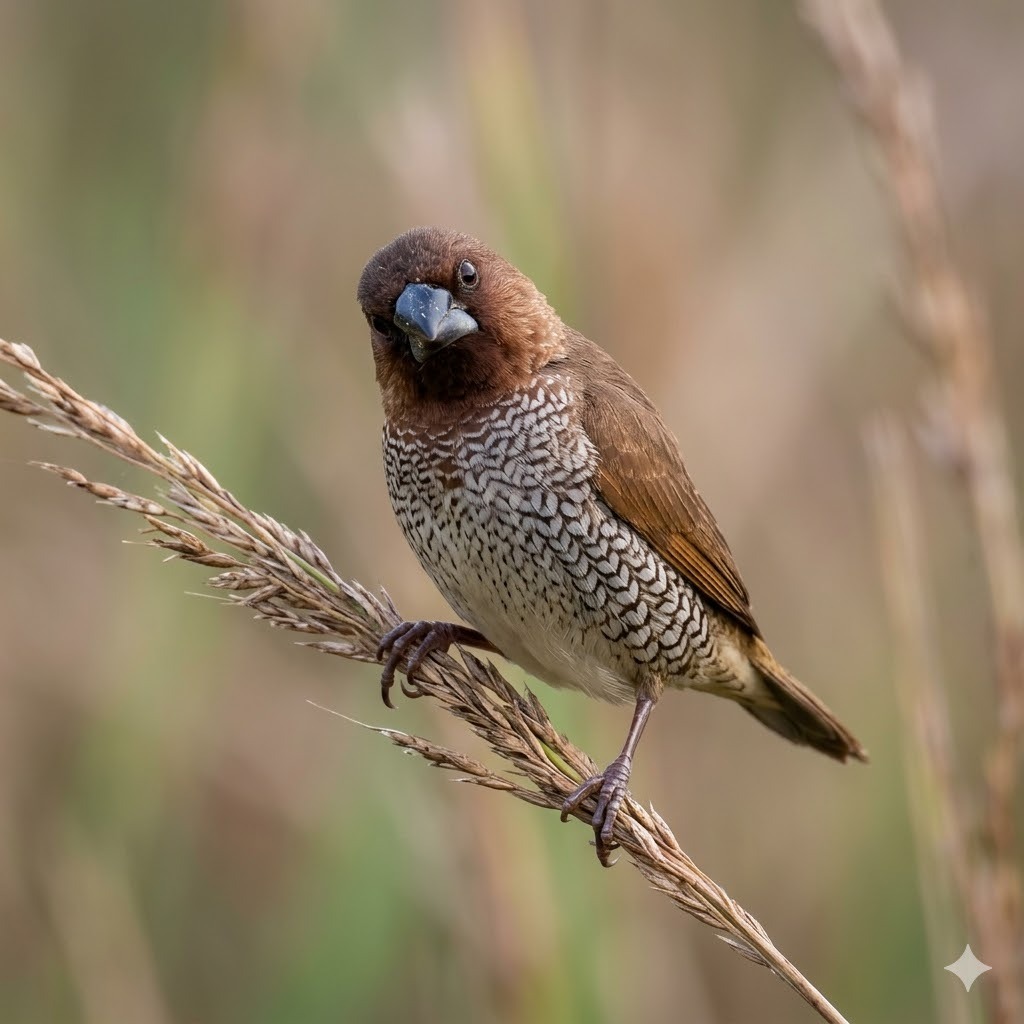
The spice finch - also called the nutmeg mannikin or scaly-breasted munia - is a small, hardy, and thoroughly undemanding finch that has been kept in aviculture for centuries. Its common names come from the elegant scalloped, scaly pattern across its breast, which looks as though each feather were dipped in nutmeg. This is not a hands-on pet: it is a calm, quiet, sociable group bird best enjoyed in a planted aviary or roomy flight, where its gentle activity and soft calls make a soothing background. For anyone wanting an easy-care starter finch that asks little and gives quiet charm, the spice finch is hard to beat.
Natural History & Origin
Spice finches are native to a vast swathe of Asia, from India and Sri Lanka across Southeast Asia to southern China and Indonesia. They inhabit grasslands, rice paddies, scrub, and cultivated farmland, moving in tight, chattering flocks that feed heavily on grass and cereal seeds. So adaptable are they that feral populations have established themselves in many warm parts of the world, from Australia to the Americas. This same hardiness and easy adaptability carries straight into captivity, where the species has long been one of the most reliable and beginner-friendly of all seed-eating finches.
Appearance
The spice finch is a small finch, about 11-12 cm in length and weighing roughly 12-14 g. Adults are warm chocolate-brown over the head, throat, and upperparts, with the striking scaled or scalloped pattern of dark-edged pale feathers across the breast and flanks that gives the "scaly-breasted" name. The bill is a stout, conical grey-black - the classic seed-cracking shape. The sexes look essentially alike, so pairs are hard to sex by eye; behaviour and song are more reliable clues. Juveniles are a plain buff-brown without the scaling, developing the adult pattern as they mature.
Temperament & Noise
Spice finches are calm, peaceful, and sociable, doing best in the company of their own kind. They are gentle and non-aggressive, mixing well with other small, mild finches in a shared aviary and rarely squabbling even when housed in numbers. Their voice is soft and unobtrusive - a series of quiet, high chirps and a faint, almost whispered song from the male that is pleasant and never a nuisance. They are more flock-watchers than performers, spending their time foraging, preening, and huddling companionably together on a shared perch. This calm, undemanding temperament, combined with their hardiness, is a large part of their long-standing popularity among aviculturists old and new.
Housing & Flight
As active little seed-eaters that live on the wing and among grasses, spice finches thrive with room to fly.
Provide:
- A roomy flight cage or, better, a planted aviary where the birds can fly horizontally.
- Several perches and a mix of natural branches and grasses.
- A group rather than a single bird - they are gregarious and unhappy alone.
- Shelter from cold, damp, and draughts; they tolerate cool conditions better than tropical finches but still need dry, protected housing.
- Bathing water, which they use readily.
They can be kept in a large box cage indoors but come into their own in a spacious aviary.
Diet
- Quality foreign-finch or mixed millet and canary seed as the staple - they are primarily seed-eaters.
- Seeding grasses and green food - chickweed, seeding grass heads, and leafy greens are relished.
- Sprouted and soaked seed, especially valued when rearing young.
- Eggfood or soft food during breeding to provide protein.
- Cuttlebone, grit, and mineral supplement for calcium and digestion.
Avoid: avocado (toxic to all birds), chocolate, caffeine, alcohol, onion, and salt.
Health & Lifespan
Spice finches typically live around 5-8 years, sometimes longer in a well-run aviary.
Common concerns:
- Chills and respiratory problems from cold, damp, or draughty housing.
- Air-sac mites, which can affect munias and related finches.
- Intestinal worms and parasites in aviary conditions.
- Overgrown claws in cage-kept birds.
- Egg binding in breeding hens lacking calcium.
They are among the hardier finches, but an avian vet and clean, dry housing keep them healthiest.
Training & Enrichment
Spice finches are not trained or handled - they are observation birds, and attempting to tame them causes needless stress. Enrichment is entirely about a naturalistic environment: seeding grasses to forage through, fresh branches and living plants, bathing water, and the company of a flock. Rotating in fresh grass heads and greens keeps the group busy and mimics the changing food supply of the wild. Watching a group work through grass heads or bathe together is the real reward of keeping them. A planted aviary that lets them behave naturally, with room to fly and cover to explore, is all the enrichment they need.
Pros & Cons
Pros:
- Hardy, easy-care, and beginner-friendly.
- Calm, quiet, and peaceful in a group.
- Attractive scaly-breast plumage.
- Mixes well in a community aviary.
- Inexpensive to keep and feed.
Cons:
- Not a hands-on or tameable pet.
- Must be kept in a group, never alone.
- Hard to sex by appearance.
- Needs dry, draught-free housing.
- Shorter lifespan than parrots.
Best Suited For
- Beginner finch and aviary keepers.
- People wanting a calm, quiet group of birds to observe.
- Mixed community aviaries of gentle finches.
- Keepers wanting low-cost, low-drama birds.
Not suited for anyone wanting a tame, handleable pet, keepers who can only house a single bird, or homes without a roomy flight or aviary.
Spice Finch (Nutmeg Mannikin) - frequently asked questions
Can spice finches be tamed or handled?
No - they are flock observation birds. Handling stresses them. Enjoy them for their behaviour and appearance, not for interaction.
How many should I keep?
Always more than one. They are gregarious and need the company of their own kind; a small group is ideal.
Are they noisy?
No - their calls are soft, high chirps and the male's quiet whispered song. They are one of the more unobtrusive aviary finches.
How can I tell males from females?
It is difficult - the sexes look alike. The male's soft courtship song is the most reliable clue.
How long do they live?
Around 5-8 years, sometimes longer with good aviary care.
🧠 Test yourself: guess the bird
Three clues from our quiz bank, each about another of our birds. Can you name them?
Clue 1.This small, stocky African parrot is named for the strong pair bond mates form, sitting closely side by side.
It's the Lovebird - read the full profile →
Clue 2.Native to American rainforests, this brilliantly colored bird can live 50 years or more in captivity.
It's the Macaw - read the full profile →
Clue 3.Studies of how these birds' beaks varied across the Galapagos helped shape Darwin's ideas on evolution.
It's the Finch (Zebra & Society) - read the full profile →
Social Needs
This is a flock bird through and through. Spice finches should never be kept singly; they need the company of their own kind and are happiest in groups where they can forage and roost together. They are peaceable colony birds and blend well into a mixed aviary of similarly gentle finches without bullying, making them a reliable choice for a community collection. In a group they are relaxed and confident, perching and roosting in companionable clusters that huddle close on cool nights. A pair will breed readily in a settled aviary, building a domed grass nest tucked into cover, and parents will feed their young diligently when given softfood and sprouted seed.