Nebelung (Felis catus)
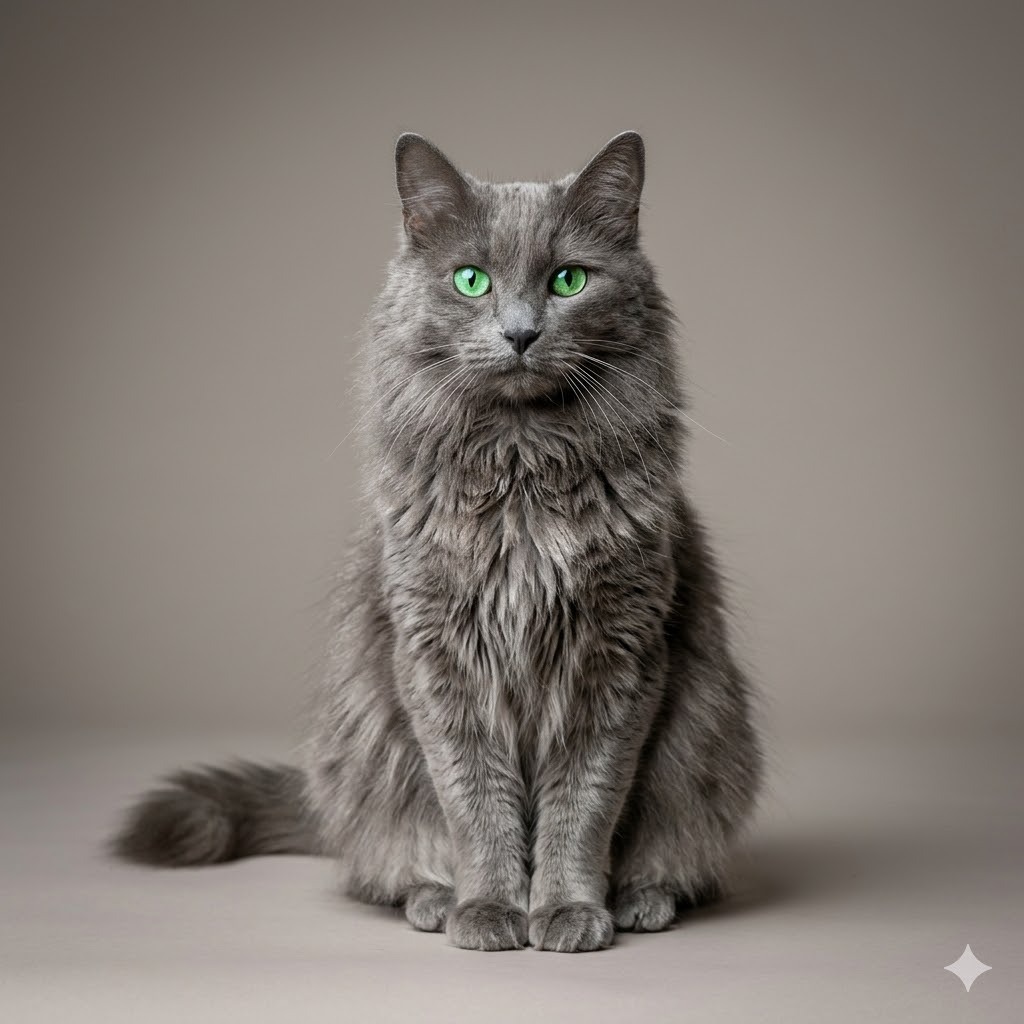
The Nebelung is a long-haired blue cat of striking elegance, often described as a Russian Blue in a flowing semi-long coat.
🗓️ Last reviewed: June 2026
Overview
The Nebelung is a long-haired blue cat of striking elegance, often described as a Russian Blue in a flowing semi-long coat. The name comes from the German word Nebel, meaning mist or fog, a reference to the shimmering silver-tipped blue coat that seems to float around the cat. Gentle, reserved, and deeply devoted to a chosen few, the Nebelung is a quiet, refined companion that bonds intensely with its family while remaining shy with strangers.
History & Origins
The Nebelung is a young and rare breed with a charming modern origin. In the early 1980s, Cora Cobb of Colorado owned a short-haired black domestic cat that produced a litter sired by a Russian Blue-type tom. One kitten, a long-haired blue male, was so beautiful that Cobb named him Siegfried after the hero of Wagner's opera cycle. A later litter from the same pairing produced a long-haired blue female, named Brunhilde.
Siegfried and Brunhilde became the foundation of the breed. With guidance from a TICA geneticist, Cobb built the Nebelung essentially as a long-haired Russian Blue, and the breed standard was written to mirror the Russian Blue in everything but coat length. To maintain health and type, Russian Blues were used as outcrosses in early breeding.
TICA granted the Nebelung championship status in 1997. The breed remains uncommon, with relatively few breeders worldwide, but it has a devoted following among lovers of quiet, dignified, long-coated cats.
Appearance
Medium-sized, long-bodied, and gracefully muscular, with a fine-boned elegance. Males weigh 4-5.5 kg (9-12 lb); females 3-4.5 kg (7-10 lb). The semi-long coat makes the cat look larger than it is.
Key features:
- Coat: medium-long, soft, fine, and dense double coat that stands slightly away from the body. A pronounced ruff and breeches develop with maturity, and the plumed tail is well furnished.
- Colour: a single colour - even blue (grey) with silver-tipped guard hairs that produce a luminous, misty sheen. Kittens may show faint ghost tabby markings that fade with age.
- Head: a modified wedge with seven flat planes, a blunt muzzle, and a quiet, slightly smiling expression.
- Eyes: large, slightly oval, and wide-set. Kittens are born with yellow-green eyes that deepen to a vivid green by about two years of age.
- Ears: large, pointed, and wide at the base, with thin skin and minimal furnishing.
- Body: long, graceful, and well-muscled with medium bone - the classic semi-foreign type.
Temperament & Character
The Nebelung is gentle, sensitive, and reserved. It forms intense bonds with one or two chosen people and is famously devoted, often following its favourite person quietly from room to room and settling nearby.
With strangers the breed is shy and cautious, frequently retreating until visitors leave. Nebelungs dislike loud, chaotic, or constantly changing environments and prefer calm, predictable routines. Sudden upheaval can leave them stressed and withdrawn.
Though quiet, the breed is playful and intelligent in a gentle way. Nebelungs enjoy interactive toys, fetch, and puzzle feeders, and they are sensitive to their owner's moods, offering soft, undemanding companionship.
This is not a lap cat for everyone - many Nebelungs prefer to sit beside rather than on their person - but with their trusted family they are affectionate, loyal, and quietly communicative.
Care
Coat & Grooming
The fine, dense double coat needs regular attention to prevent matting. Comb 2-3 times weekly with a fine-toothed comb, more often during the twice-yearly seasonal sheds when the soft undercoat loosens heavily.
The coat tends to tangle around the ruff, breeches, and under the tail. A gentle slicker or comb worked through these areas prevents knots. The silky texture means mats can form quickly if grooming lapses.
Bathe occasionally as needed. Clean ears as required, trim claws every 2 weeks, and brush teeth several times weekly. Most Nebelungs accept gentle grooming as quiet bonding time.
Exercise & Enrichment
The breed is moderately active and intelligent. Provide cat trees, window perches, puzzle feeders, and daily interactive play with wand toys. Many Nebelungs enjoy a quiet game of fetch.
Because the breed dislikes chaos, enrichment works best as calm, structured play rather than loud commotion. A predictable daily play session suits the Nebelung's sensitive nature and prevents boredom in this watchful, intelligent cat.
Health & Lifespan
Average lifespan is 13-16 years - the breed is generally healthy, benefitting from its Russian Blue heritage.
Common concerns:
- Obesity - the leading practical health risk, as the breed is calm and food can be over-offered.
- Dental disease - regular brushing and check-ups recommended.
- Hereditary issues from outcrosses - because Russian Blues are used in breeding, the breed shares that line's generally robust health, but bladder stones and the usual feline cardiac concerns warrant routine veterinary attention.
- Stress-related conditions - sensitive cats can develop stress-linked urinary or appetite problems in chaotic homes.
Choose a breeder who keeps cats in calm conditions and screens breeding stock for general health.
Feeding & Nutrition
Adults typically eat 45-65 g of quality cat food per day, adjusted for the breed's moderate activity and tendency toward weight gain.
A balanced, high-quality diet maintains the luxurious coat and a healthy weight. Feed measured meals rather than free-feeding; the calm Nebelung gains weight easily.
Fresh water should always be available; a mix of wet and dry food supports hydration and urinary health.
Living With
Litter
Standard provisions: 1 + 1 box per cat, scooped daily, in a quiet low-traffic location the shy breed can use undisturbed. Low-dust unscented litter is generally preferred.
Multi-cat households
Nebelungs do best in calm households and can live happily with gentle, compatible cats, especially when introduced slowly. They dislike pushy or boisterous companions and need careful, patient introductions.
Indoor vs outdoor
Indoor-only is strongly recommended. The breed is shy, valuable, and ill-equipped for outdoor dangers, and the long coat picks up debris and burrs. Window perches, catios, and quiet enrichment satisfy the breed's curiosity safely.
Pros & Cons
Pros
- Strikingly beautiful misty blue semi-long coat.
- Deeply devoted and loyal to its family.
- Quiet, gentle, and well-mannered.
- Generally healthy with good longevity.
- Calm companion for peaceful homes.
Cons
- Shy and slow to warm to strangers.
- Dislikes chaos, noise, and change.
- Long coat needs regular combing to avoid mats.
- Prone to weight gain if overfed.
- Rare and can be expensive and hard to find.
Best Suited For
- Quiet, calm households and predictable routines.
- Owners wanting a devoted, gentle, one-person or one-family cat.
- People who appreciate a reserved, dignified companion.
- Adults, seniors, and gentle older children.
- Owners willing to commit to regular grooming.
Not suited for busy, noisy, or chaotic homes, owners wanting an instantly outgoing social cat, or households with young boisterous children or pushy pets.
Nebelung (Felis catus) - frequently asked questions
Is the Nebelung just a long-haired Russian Blue?
Essentially yes - it was developed from Russian Blue lines and its standard mirrors the Russian Blue in everything but the semi-long coat. It is, however, recognised as its own distinct breed.
Are Nebelungs good with strangers?
No - they are shy and reserved, often hiding from visitors. With their own family they are deeply affectionate and loyal.
How much grooming do they need?
Combing 2 to 3 times weekly, more during seasonal sheds, to keep the fine double coat free of mats.
Are Nebelungs vocal?
No - they are quiet cats that communicate softly and prefer calm surroundings.
Are they hypoallergenic?
No - despite occasional claims tied to the Russian Blue, the Nebelung sheds and produces dander and is not truly hypoallergenic.
🧠 Test yourself: guess the cat
Three clues from our quiz bank, each about another of our cats. Can you name them?
Clue 1.Often called the 'Greyhound of cats' for its arched body and galloping play, this curly-coated breed first appeared on a southwest English farm in 1950.
It's the Cornish Rex - read the full profile →
Clue 2.Unlike other curly-coated cats, this stocky breed keeps its dense, woolly curls on a full, non-thinning coat.
It's the Selkirk Rex - read the full profile →
Clue 3.Famous for going limp and relaxed when picked up, this big walnut-eyed cat was developed as an offshoot of the Ragdoll.
It's the Ragamuffin - read the full profile →
💛 Adoptable Nebelung (Felis catus)s near you
Real cats of this breed (and close mixes) waiting in shelters and rescues right now, live from Petfinder. We have no affiliation and earn nothing - if someone catches your eye, the link goes straight to their shelter. New to adopting? Start with our adoption guide.
Widget not loading (some ad-blockers hide it)? Search directly on petfinder.com.