Oriental Longhair
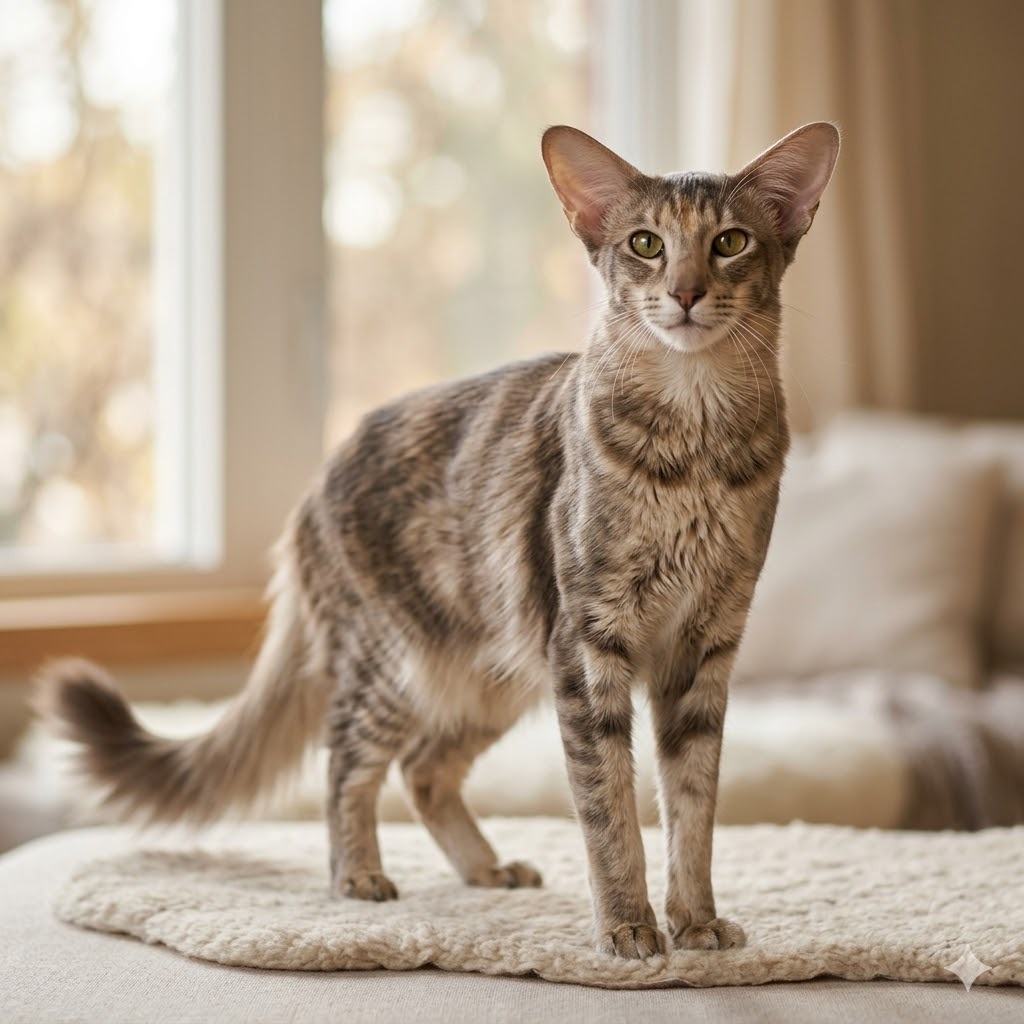
The Oriental Longhair is the semi-longhaired member of the Oriental and Siamese family - a slender, elegant, people-focused cat with the svelte Siamese body type, large flaring ears, and a fine, silky coat that flows into a beautifully plumed tail.
🗓️ Last reviewed: July 2026
Overview
The Oriental Longhair is the semi-longhaired member of the Oriental and Siamese family - a slender, elegant, people-focused cat with the svelte Siamese body type, large flaring ears, and a fine, silky coat that flows into a beautifully plumed tail. Unlike the Siamese, it comes in a huge range of solid colours and patterns rather than pointed markings. Lightly built and athletic, it typically weighs 4-7 kg (males larger, females daintier). Vocal, intelligent, and intensely bonded to their people, Oriental Longhairs are among the most interactive of cats. They are best suited to owners who want a talkative, affectionate shadow rather than an independent, quiet pet.
History & Origins
The Oriental group descends from the Siamese. When Siamese cats reached Britain and the wider West from Thailand (then Siam) in the late 1800s, breeders began working not only with the classic pointed cats but also with non-pointed Siamese-type cats that appeared in the same lines and crosses.
Selective breeding produced the Oriental Shorthair - a Siamese in body type but in solid, tabby, and other non-pointed colours. The Oriental Longhair emerged from breeding programmes that introduced a longhair gene, giving the same svelte cat a semi-long, silky coat. It has been known by earlier names such as the British Angora before being standardised as the Oriental Longhair.
Recognised by major registries in the late twentieth century, the breed shares its foundation, standard, and temperament with the Siamese and Oriental Shorthair, differing chiefly in coat length. It remains a specialist favourite among admirers of the elegant Oriental type.
Appearance
Slender, long-lined, and graceful, the Oriental Longhair has the classic svelte Oriental body draped in a fine, flowing coat. Weight is typically 4-7 kg, with the breed appearing lighter than it feels due to its fine bone and lean muscle.
Key features:
- Coat: semi-long, fine, silky, and close-lying, with no woolly undercoat. Longest on the plumed tail; the body coat lies relatively flat.
- Colour: an enormous range of solid colours, tabby, tortoiseshell, smoke, and shaded patterns - anything except the pointed Siamese pattern.
- Head: long, wedge-shaped, with a straight profile and a fine muzzle.
- Ears: very large, wide at the base, flaring to continue the lines of the wedge - a signature feature.
- Eyes: almond-shaped and slanted, usually a vivid green (blue in white cats).
- Body: long, tubular, and svelte, with fine bone and firm muscle.
- Legs: long and slim, ending in small oval paws.
- Tail: long, thin, and tapering to a full, elegant plume.
Temperament & Character
The Oriental Longhair is affectionate, intelligent, and extremely people-oriented. Like its Siamese relatives, it forms intense bonds and wants to be involved in everything its owner does, following them from room to room and "helping" with daily tasks.
The breed is famously vocal, communicating in a wide range of chirps, trills, and demanding calls (though often softer than the classic Siamese voice). These cats crave attention and interaction and dislike being left alone for long periods.
Playful, curious, and athletic, Oriental Longhairs stay kitten-like well into adulthood. They are quick learners, often mastering fetch, harness walking, and simple tricks, and they thrive on mental and social engagement.
Care
Coat & Grooming
Despite being semi-long, the fine, low-undercoat coat is surprisingly easy to maintain. A weekly brush or comb keeps it silky and removes loose hair, with a little extra attention to the plumed tail.
The lack of a woolly undercoat means minimal matting. Clean ears as needed, trim claws every couple of weeks, and brush teeth regularly.
Exercise & Enrichment
This is an active, intelligent breed that needs abundant stimulation. Provide tall cat trees, climbing shelves, interactive wand toys, puzzle feeders, and daily interactive play.
Because they are so social, Oriental Longhairs benefit from companionship - another cat or plenty of human interaction. A bored, lonely Oriental can become destructive or excessively vocal, so keep mind and body engaged.
Health & Lifespan
Average lifespan is 12-15 years.
Common concerns:
- Dental disease - the breed can be prone to gum and dental issues; regular dental care helps.
- Amyloidosis and liver issues - occasionally seen in Oriental and Siamese lines.
- Progressive retinal atrophy (PRA) - a heritable eye condition with DNA testing available in related lines.
- Hypertrophic cardiomyopathy (HCM) - screen breeding cats.
- Obesity - less common given their active build, but keep meals measured.
Choose a breeder who screens for heritable conditions and prioritises the health of the Oriental and Siamese lines.
Feeding & Nutrition
Feed a high-quality, protein-rich diet suited to an active, lean cat. These slender cats have brisk metabolisms, but measured meals still help maintain ideal condition.
A mix of wet and dry food supports hydration and dental health. Keep fresh water available, and adjust portions to the cat's activity level and life stage.
Living With
Litter
Standard provisions: 1 + 1 box per cat, scooped daily. A medium box suits this slim breed. Low-dust, unscented litter is generally preferred, and fastidious Orientals appreciate a clean box.
Multi-cat households
Oriental Longhairs are highly social and generally thrive with feline companionship, especially another active, interactive cat. Company helps prevent the loneliness this attention-loving breed is prone to.
Indoor vs outdoor
Indoor-only is strongly recommended. The breed's fine build, trusting nature, and value make it vulnerable outdoors. A catio or harness walks satisfy its curiosity and energy safely.
Pros & Cons
Pros
- Elegant, striking appearance in countless colours.
- Deeply affectionate and people-focused.
- Intelligent and highly trainable.
- Silky coat is easy to maintain.
- Playful and interactive well into adulthood.
Cons
- Very vocal and demanding of attention.
- Dislikes being left alone for long.
- Needs plenty of stimulation and often a companion.
- Some heritable health conditions to screen for.
- Not a quiet, independent pet.
Best Suited For
- Owners wanting a talkative, deeply bonded companion.
- Households where someone is home often, or another cat is present.
- Active homes with time for play and training.
- Admirers of the elegant Oriental and Siamese type.
- Multi-cat households.
Not suited for people wanting a quiet, low-interaction cat, owners frequently away for long hours, or homes unable to provide steady companionship and stimulation.
Oriental Longhair - frequently asked questions
Are Oriental Longhairs vocal?
Yes - like their Siamese relatives, they are talkative and communicative, though often a little softer in voice. They will "converse" with their owners frequently.
How is the Oriental Longhair different from the Siamese?
It shares the Siamese body type but comes in solid and patterned colours rather than the pointed pattern, and it has a semi-long, silky coat with a plumed tail.
Do they need a lot of grooming?
No - the fine coat lacks a woolly undercoat, so a weekly brush is usually enough, with a little extra care for the tail plume.
Can they be left alone?
Not ideally. They are intensely social and can become lonely or destructive if left for long periods, so a companion cat or plenty of interaction is important.
Are they good with children and other pets?
Yes - they are sociable and playful, generally getting on well with gentle children and other cats, especially active, interactive ones.
🧠 Test yourself: guess the cat
Three clues from our quiz bank, each about another of our cats. Can you name them?
Clue 1.A semi-longhair whose cashmere-soft coat repels water, with auburn or other color limited to the ears and tail in a signature pattern.
It's the Turkish Van - read the full profile →
Clue 2.Named after Turkey's capital, this fine-boned longhair has a shimmering coat with no woolly undercoat, giving it a graceful look.
It's the Turkish Angora - read the full profile →
Clue 3.Lacking the two outer coat layers, this mutation-born breed feels hot to the touch and loves to burrow under blankets.
It's the Cornish Rex - read the full profile →
💛 Adoptable Oriental Longhairs near you
Real cats of this breed (and close mixes) waiting in shelters and rescues right now, live from Petfinder. We have no affiliation and earn nothing - if someone catches your eye, the link goes straight to their shelter. New to adopting? Start with our adoption guide.
Widget not loading (some ad-blockers hide it)? Search directly on petfinder.com.