Garter Snake
The Garter Snake (Thamnophis species) is a small, active, diurnal snake that makes an engaging and easy-to-observe pet.
🗓️ Last reviewed: July 2026
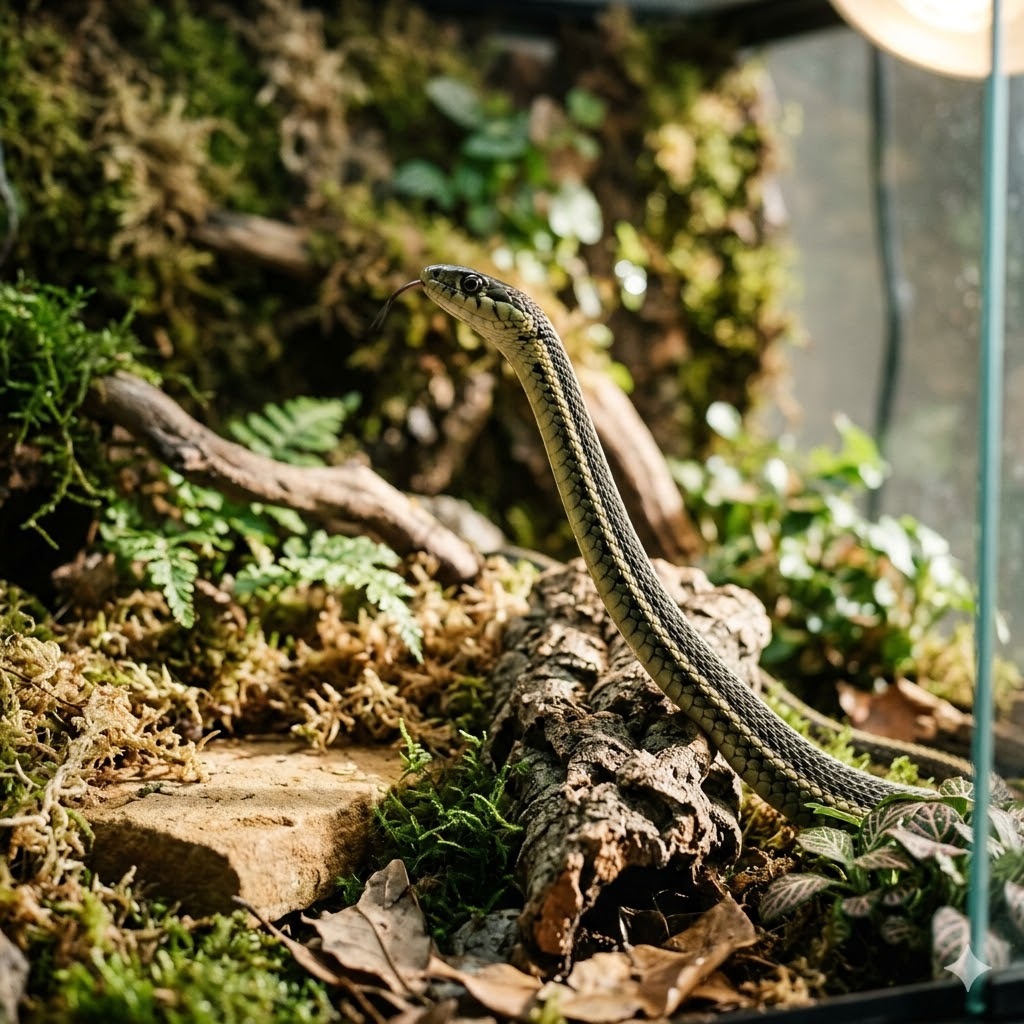
Overview
The Garter Snake (Thamnophis species) is a small, active, diurnal snake that makes an engaging and easy-to-observe pet. Unlike many secretive nocturnal reptiles, garter snakes are out and about during the day, moving around their enclosure and giving keepers plenty to watch. They are widespread across North America, hardy, and undemanding, though they need a more varied diet than the typical rodent-only snake. Their alert, busy nature and manageable size make them a favourite for keepers who want a lively, visible reptile.
Natural History
Wild range: across most of North America, from Canada to Central America, in an enormous variety of habitats - meadows, woodland edges, marshes, and the banks of ponds and streams. Garter snakes are strongly associated with water and are excellent swimmers. They are diurnal (active by day) and often bask in the open. In cooler regions they brumate through winter, sometimes gathering in large communal dens. They are among the most commonly encountered wild snakes in North America.
There are many species and subspecies of garter snake, and their adaptability to cold climates sets them apart from most pet snakes - some ranges extend far north where few other reptiles survive. Like boas, garter snakes give birth to live young rather than laying eggs, often producing large litters. Their close tie to water shapes everything about them: they hunt along shorelines, take refuge in damp cover, and stay near a reliable water source. This natural history explains why a captive garter snake wants both a warm basking spot and easy access to water.
Appearance
Adults 45-75 cm length, with some individuals reaching a metre; typically slender and lightweight. Females are usually larger than males.
Most garter snakes show lengthwise stripes - commonly a pale stripe down the back with side stripes - over a darker base of green, brown, grey, or black. Colour and pattern vary widely between the many species and localities, and captive-bred colour varieties exist. The build is slim and the head is only slightly wider than the neck.
Temperament & Handling
Alert, active, and generally tolerant with regular gentle handling. Garter snakes are fast and curious, so they may squirm at first, but most settle with routine. When startled they may release musk - a harmless but pungent secretion - as a defence. This usually fades as the snake grows used to being handled. Support the body, move calmly, and keep sessions short at first. They rarely bite, and bites are minor.
Because garter snakes are so active and visible during the day, much of the enjoyment comes from watching them explore, swim, and bask rather than from constant handling. Captive-bred animals are generally calmer and more accustomed to people than wild-caught ones, which are more prone to musking and stress. With short, consistent sessions a garter snake usually becomes noticeably tamer over weeks, learning that hands mean gentle contact rather than a threat. Always wash hands before and after handling.
Enclosure
Minimum: 90 × 45 × 45 cm for one adult; larger is better for these active snakes. A secure, well-ventilated glass or PVC terrarium with a locking lid.
Provide:
- Two or more hides across a temperature gradient.
- Substrate: aspen, cypress mulch, or paper for easy cleaning.
- Climbing branches and cover - garter snakes like to explore and bask.
- A large, sturdy water dish; many enjoy soaking.
Some keepers house garter snakes in compatible groups, but this requires extra space, separate feeding to avoid accidents, and careful monitoring. Single housing is simplest and safest. When feeding grouped snakes together there is a real risk of one snake grabbing the same prey as another, so they should always be fed separately. A tight-fitting, escape-proof lid is essential, as these slender, energetic snakes are strong and persistent at finding gaps.
Heating & Lighting
- Warm side: 28-30°C basking surface.
- Cool side: 21-24°C.
- Night: can drop to 18-21°C.
- UVB: beneficial for these diurnal, sun-loving snakes; low to moderate output is recommended.
Use an overhead basking bulb and UVB on a thermostat and timer to mimic a natural day cycle.
Humidity
Ambient 40-60%. Garter snakes are tied to wetter habitats than desert species and appreciate a large water dish for soaking. Keep the substrate mostly dry but provide a humid hide or damp corner to support shedding.
Diet
Carnivorous, and notably varied. Garter snakes need more than rodents:
- Staple: fish (fed carefully), earthworms, and nightcrawlers.
- Some individuals also take amphibian-based foods or thawed rodents.
- Avoid: exclusive goldfish diets and certain raw fish that contain thiaminase, which can cause a vitamin B1 deficiency over time.
Offer a rotating mix so no single food dominates, and supplement as needed. Feed juveniles every few days and adults every 5-7 days. A varied diet is essential - a garter snake fed only rodents, or only one type of fish, can develop deficiencies.
The varied diet is the single most important thing to get right with this species and the main reason it is not quite as effortless as a rodent-only snake. Earthworms and nightcrawlers make an excellent, safe base food, while suitable fish add variety - but fish high in thiaminase should be avoided or limited because they break down vitamin B1. Rotating between several foods keeps nutrition balanced and appetite strong. Uneaten food should be removed promptly, and any wild-collected food carries a parasite risk, so captive-raised feeders are the safer choice.
Health & Lifespan
6-15 years.
Common concerns:
- Thiamine (vitamin B1) deficiency from feeding thiaminase-rich fish.
- Nutritional imbalance from an unvaried diet.
- Respiratory infections from cold or overly damp conditions.
- Parasites, especially in wild-caught animals.
- Skin infections from a chronically wet, dirty substrate.
Pros & Cons
Pros:
- Active and diurnal - easy to see and observe.
- Small, manageable size.
- Hardy and undemanding.
- Can sometimes be kept in groups.
Cons:
- Needs a varied diet, not just rodents.
- May musk when stressed.
- Fast and squirmy until settled.
- Wild-caught animals often carry parasites.
Best Suited For
- Keepers who want an active, visible snake.
- Beginners willing to manage a varied diet.
- Those interested in a diurnal, watchable species.
Not suited for owners who want a snake that simply eats rodents, or who dislike the occasional musky smell.
Garter Snake - frequently asked questions
Are they good for beginners?
Yes, as long as the keeper is ready to provide a varied diet of fish and worms rather than rodents alone.
Can I keep several together?
Sometimes - garter snakes can be housed in compatible groups with enough space and separate feeding, but single housing is easiest and avoids feeding accidents.
Why does mine smell?
When startled, garter snakes release musk as a defence. It is harmless and usually fades as the snake grows tame.
How long do they live?
6-15 years with good care and a balanced diet.
Do they need UVB?
Being diurnal and sun-loving, they benefit from low to moderate UVB along with a proper basking spot.
🧠 Test yourself: guess the reptile
Three clues from our quiz bank, each about another of our reptiles. Can you name them?
Clue 1.Often sold tiny but reaching over five feet, this tree-dwelling herbivore is a far bigger commitment than buyers expect.
It's the Green Iguana - read the full profile →
Clue 2.This small Central Asian tortoise is the only one of its genus with four toes, not five, on each front foot.
It's the Russian Tortoise - read the full profile →
Clue 3.This stocky Australian lizard gapes its mouth to flash a startling cobalt-colored mouth-organ at predators when threatened.
It's the Blue-Tongue Skink - read the full profile →