Rosy Boa
The Rosy Boa (Lichanura trivirgata) is one of the best beginner snakes in the hobby - small, slow-moving, exceptionally docile, and easy to house.
🗓️ Last reviewed: July 2026
Overview
The Rosy Boa (Lichanura trivirgata) is one of the best beginner snakes in the hobby - small, slow-moving, exceptionally docile, and easy to house. Native to the deserts of the American southwest and northern Mexico, this hardy little boa stays manageable for its whole life, tolerates handling calmly, and thrives in a simple, dry setup. Its gentle temperament and modest size make it a standout first snake for keepers who want a rewarding reptile without the space or intensity of larger constrictors.
Natural History
Wild range: southern California, Arizona, and Baja California and Sonora in Mexico. Lives in rocky, arid deserts and dry scrubland, sheltering in crevices and under rocks during the heat of the day. Rosy Boas are crepuscular to nocturnal, emerging at dusk to hunt small prey. In the wild they endure a wide temperature swing between day and night and go through a cool dormant period (brumation) in winter. They are slow, deliberate movers that rely on ambush and constriction rather than speed.
Like other boas, the Rosy Boa gives birth to live young rather than laying eggs, producing small litters after a summer breeding season. Wild individuals stay close to reliable rock shelters and rarely travel far, which makes them patient sit-and-wait hunters. Their tolerance for heat, drought, and cool nights is exactly what makes them so forgiving in captivity - they are built to handle the fluctuating, low-humidity conditions of a desert home, and that same resilience carries over to a well-run enclosure.
Appearance
Adults 60-90 cm length, typically 150-450 g. One of the smaller boas.
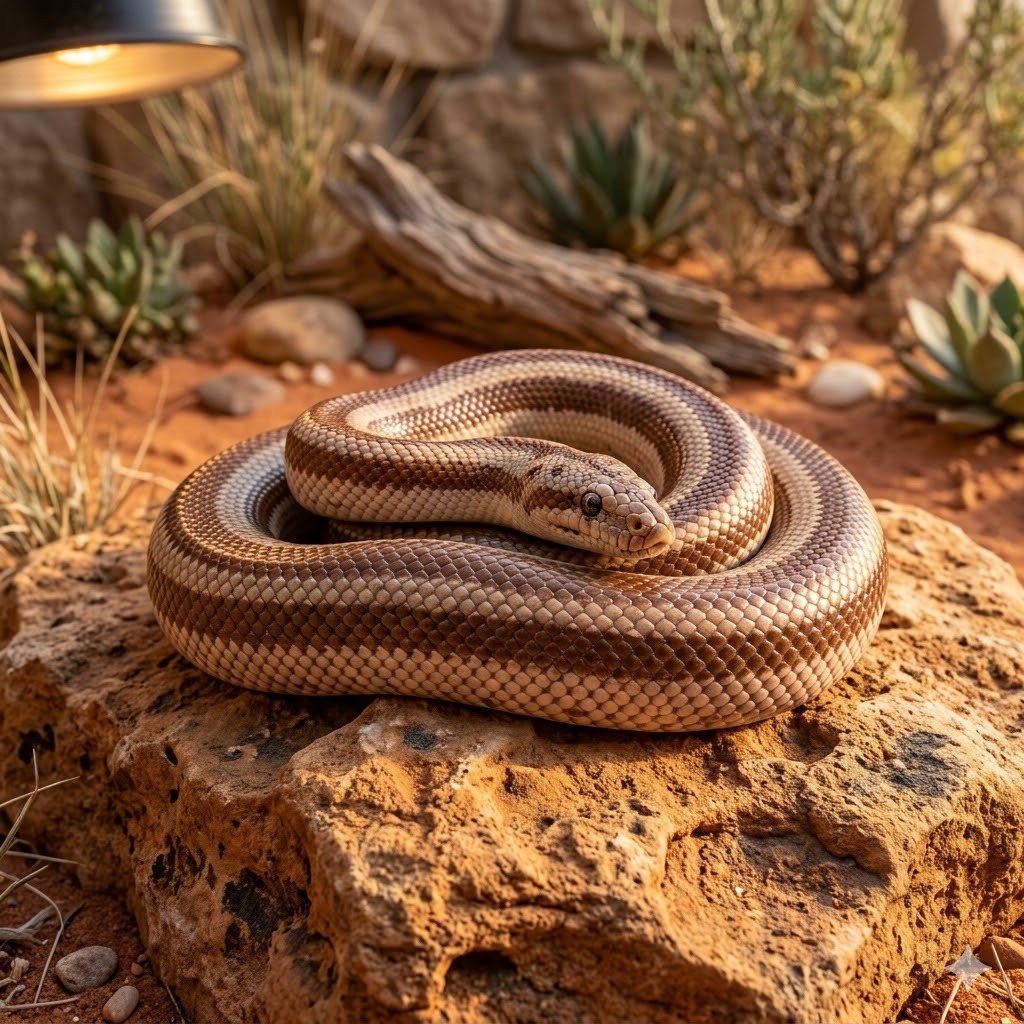
Base colours range from grey to tan, rosy, or cream, marked with three lengthwise stripes that may be orange, brown, or slate depending on locality. Many regional and captive-bred varieties exist, differing in stripe colour, contrast, and cleanness. The body is thick for the animal's length, with a blunt tail and smooth, glossy scales.
Temperament & Handling
Calm, slow, and remarkably tolerant. Rosy Boas rarely bite and almost never rush or strike defensively. They move deliberately across the hands and are among the easiest snakes to handle for nervous or first-time keepers. Support the body fully and handle gently. Avoid handling for a day or two after feeding and during a shed, when the snake is less comfortable. Their slow pace makes escapes easy to prevent, though a secure lid is still essential.
When they do feel threatened, Rosy Boas typically respond by curling into a ball and hiding the head rather than striking - a defensive rather than aggressive species. Short, regular handling sessions of five to ten minutes a few times a week help a young snake grow accustomed to human contact without becoming stressed. Because they are so unhurried, they make an ideal snake for teaching older children safe, calm handling under supervision. Wash hands before and after handling, as with any reptile.
Enclosure
Minimum: 90 × 45 × 30 cm for one adult. Glass or PVC terrarium with a tightly secured, lockable lid - Rosy Boas are patient escape artists that push at loose corners.
Provide:
- At least two hides - one on the warm side, one on the cool side.
- Substrate: aspen shavings or a dry desert-style bedding that holds a burrow.
- Rocks and low branches for enrichment and to help with shedding.
- A shallow water dish, kept clean.
Keep the enclosure dry and well ventilated. A snug, secure hide is more important to this species than open floor space. Rosy Boas feel safest in tight, enclosed spaces, so hides that fit the body closely will be used far more than large open caves. They also appreciate a shallow layer of substrate they can partially burrow into. Avoid overcrowding the enclosure with damp decor or live plants that raise humidity, as this species is adapted to dry air. A clean, simple, secure setup suits them best, and their calm nature means they rarely stress in a well-arranged home.
Heating & Lighting
- Warm side: 29-32°C basking surface.
- Cool side: 22-25°C.
- Night: can drop to 18-21°C; the natural temperature swing suits them.
- UVB: not strictly required, but low-output UVB can be provided for general wellbeing.
Use an overhead heat source or under-tank heater controlled by a thermostat. Never rely on an unregulated heat source.
Humidity
Ambient 30-40%. Rosy Boas are a dry desert species and do poorly in damp conditions. Provide a slightly moist hide only during shedding, and otherwise keep the enclosure dry to prevent scale and respiratory problems.
Diet
Carnivorous. Feeds on appropriately sized rodents:
- Staple: pinkie to small adult mice, matched to the snake's girth.
- Frozen-thawed prey is preferred and safest.
Rosy Boas are notoriously slow, cautious feeders. They may take their time deciding to eat and sometimes refuse a meal, especially around brumation. Offer food in the evening, give the snake privacy, and be patient. Feed juveniles every 5-7 days and adults every 7-14 days. Do not handle for a day or two after a meal.
Because they are low-energy animals, Rosy Boas are easy to overfeed. Prey should be no wider than the thickest part of the snake's body, and the feeding schedule should lean toward less rather than more. A healthy adult on a modest schedule stays lean and active; a boa fed too often becomes overweight, which shortens its life. Always thaw frozen prey thoroughly and warm it to encourage a reluctant feeder to strike. If a snake refuses food during the cooler months, this is usually a normal seasonal response and not cause for alarm as long as body weight holds steady.
Health & Lifespan
15-30 years.
Common concerns:
- Respiratory infections from excess humidity or cold.
- Retained shed if the humid hide is missing during a shed.
- Obesity from overfeeding this low-energy species.
- Mites on new or poorly quarantined animals.
- Refusal to feed around brumation - usually normal, but monitor weight.
Pros & Cons
Pros:
- Extremely docile and easy to handle.
- Small, manageable size for life.
- Simple, dry setup.
- Long-lived.
- Quiet and low-odour.
Cons:
- Slow, sometimes fussy feeder.
- Feeds on rodents.
- Needs a very secure lid.
- 15-30 year commitment.
Best Suited For
- First-time snake owners.
- Keepers wanting a small, calm snake.
- Apartment dwellers with limited space.
Not suited for owners who want a fast-growing or highly active display snake, or who are uncomfortable feeding rodents.
Rosy Boa - frequently asked questions
Are they good for beginners?
Yes - the Rosy Boa is widely considered one of the best beginner snakes for its calm nature and simple care.
How big do they get?
Small - usually 60-90 cm as adults, staying easy to handle for life.
Why won't mine eat?
Rosy Boas are slow, deliberate feeders and often fast around brumation. Occasional refusals are normal; monitor weight and offer food with privacy.
How long do they live?
15-30 years with good care. Plan for a long commitment.
Do they need a humid tank?
No - they are a dry desert species. Keep the enclosure dry, with a moist hide only for shedding.
🧠 Test yourself: guess the reptile
Three clues from our quiz bank, each about another of our reptiles. Can you name them?
Clue 1.Some color forms of this docile pet reptile mimic the deadly coral snake's red, yellow, and black bands.
It's the King Snake / Milk Snake - read the full profile →
Clue 2.A relatively small, heavy-bodied constrictor, it can survive long fasts and may refuse food for weeks or months without harm.
It's the Ball Python - read the full profile →
Clue 3.A harmless rodent-eating colubrid, it is often confused with the venomous copperhead but kills prey by squeezing.
It's the Corn Snake - read the full profile →