Rubber Ducky Isopod
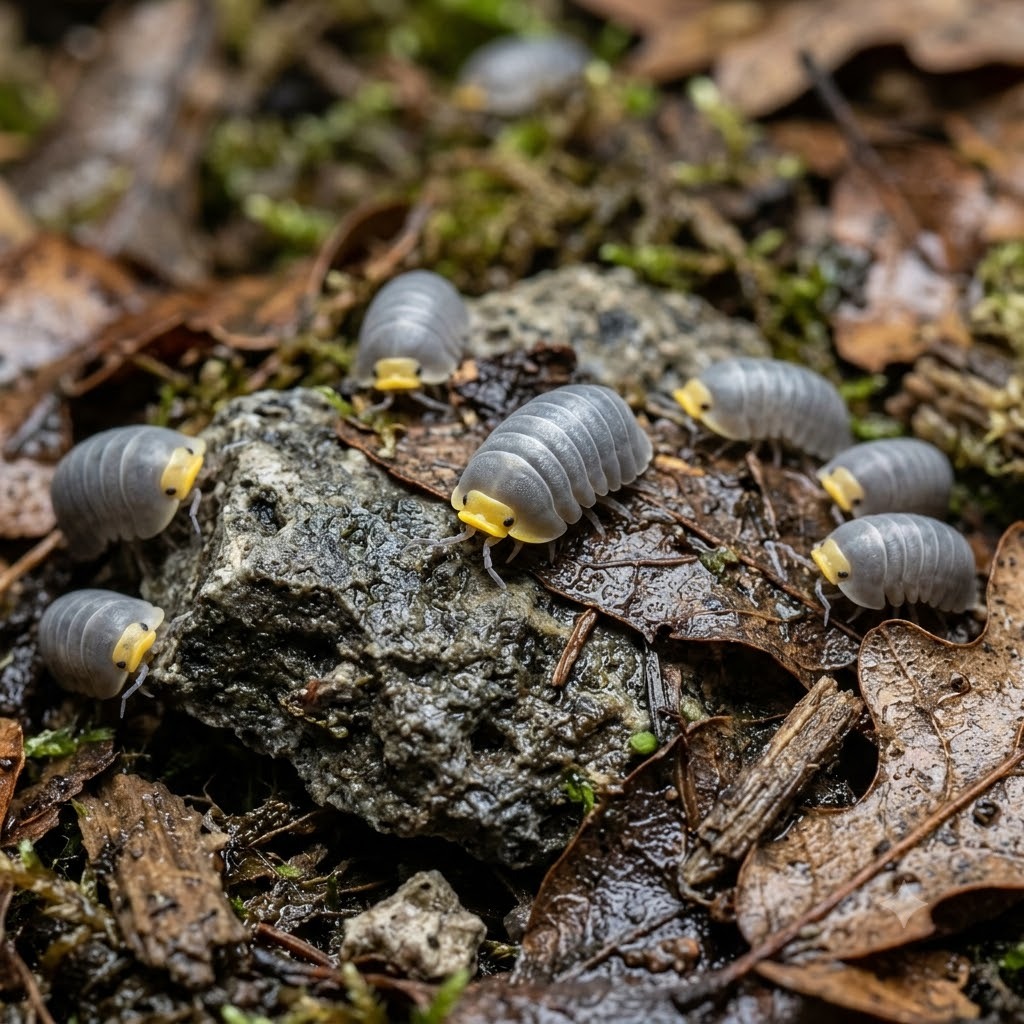
The Rubber Ducky Isopod is the crown jewel of the isopod hobby - a round little cave crustacean whose yellow face and gray back genuinely resemble a rubber duck, once trading for astonishing prices.
🗓️ Last reviewed: July 2026
Overview
The Rubber Ducky Isopod is the crown jewel of the isopod hobby - a round little cave crustacean whose yellow face and gray back genuinely resemble a rubber duck, once trading for astonishing prices. Average lifespan is 2-3 years. (Cubaris sp. 'Rubber Ducky'.)
Origin & Habitat
Limestone karst caves of Thailand - discovered by the hobby in the 2010s and still bred from those cave-adapted lines.
Appearance
About 1 cm, deeply domed and smooth. Slate-gray shell with a butter-yellow 'face' and skirt - the duck resemblance is real and disarming.
Temperament & Handling
Shy and slow - a treasure you check on under the bark rather than watch parade. Rolls into a perfect ball when disturbed (it's a true 'roly-poly').
Enclosure
A small, stable tub (3-6 L) with limited ventilation to hold humidity, deep substrate mixed with crushed limestone, abundant leaf litter and cork slabs to hide beneath.
Heating, Humidity, Lighting
The cave formula: cool-to-mild 20-24°C, humidity high (80%+), substrate evenly moist but never swampy, air changes gentle. Stability beats perfection.
Diet
Leaf litter and rotting wood, dusted with occasional vegetables, fish flakes and calcium/limestone. Light feeding - this is a slow-metabolism cave animal.
Health & Lifespan
Hardy once established but slow: broods are small and months apart, which is why colonies stay precious. Avoid boom-bust moisture swings and it will quietly thrive.
Pros & Cons
Pros
- The cutest invertebrate in the hobby, full stop
- Small, silent, low-care colony
- No longer bank-breaking - prices have fallen
Cons
- Slow breeder - colonies build over a year
- Shy; you'll lift bark to visit them
- Less forgiving of dryness than Porcellio
Rubber Ducky Isopod - frequently asked questions
Why were they so expensive?
New discovery + slow breeding + viral cuteness. As captive colonies multiplied, prices fell from hundreds per head to pocket-money levels.
Do they need limestone?
They come from limestone karst and use calcium heavily - mix crushed limestone or cuttlebone into the substrate and they'll graze it.
Can they share a bioactive tank?
They prefer cooler, stabler, damper conditions than most reptile tanks provide - a dedicated tub is where they shine.
🧠 Test yourself: guess the exotic
Three clues from our quiz bank, each about another of our exotic. Can you name them?
Clue 1.This twig-mimicking insect is a master of camouflage and can sometimes regrow a lost leg when it molts.
It's the Stick Insect (Phasmid) - read the full profile →
Clue 2.This predatory insect, named for its folded, spiked forelegs held as if in prayer, is the only insect that can swivel its head nearly 180 degrees.
It's the Praying Mantis - read the full profile →
Clue 3.Kept as a low-maintenance pet abroad, this slow nocturnal animal needs calcium to build its huge spiral shell.
It's the Giant African Land Snail - read the full profile →