Curly Hair Tarantula
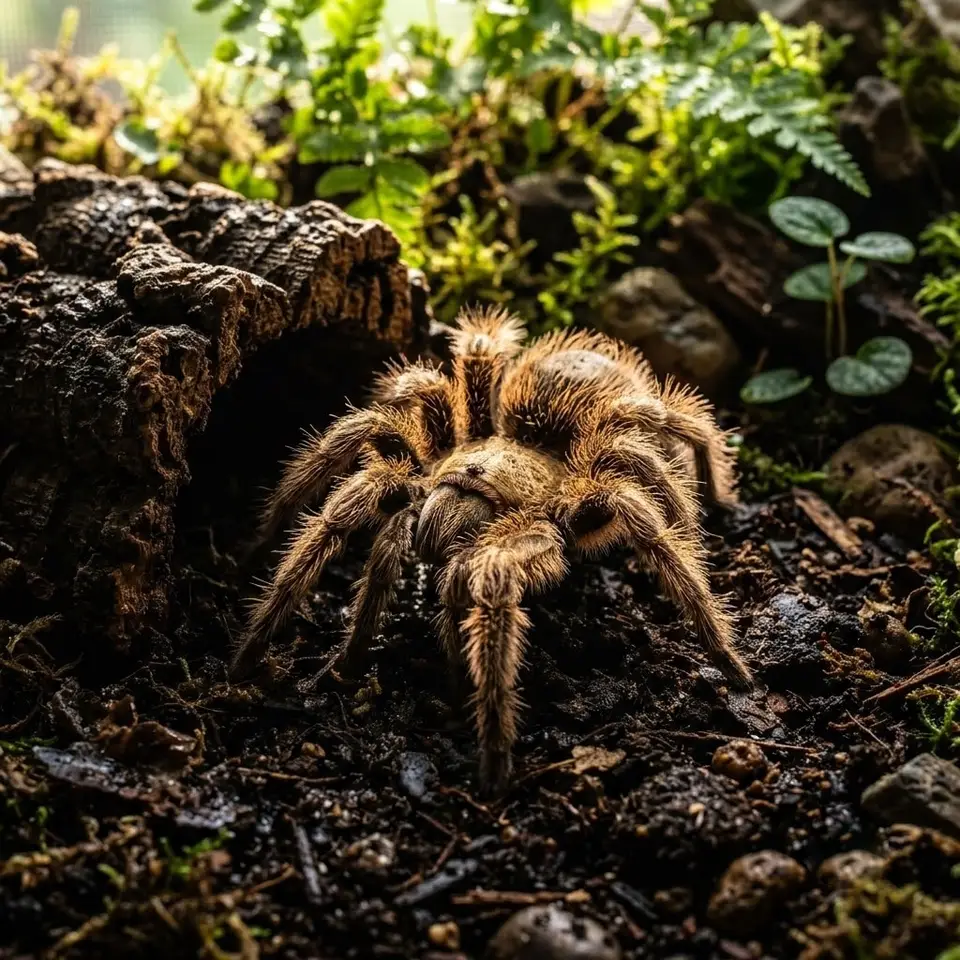
The Curly Hair Tarantula (*Tliltocatl albopilosus*, formerly *Brachypelma albopilosum*) is a plump, ground-dwelling spider covered in dark bristles with longer, curled gold ones that give it its name and a golden-bronze sheen.
Updated: October 2026
Group guide: Tarantula
 AI illustration
Overview
The Curly Hair Tarantula (Tliltocatl albopilosus, formerly Brachypelma albopilosum) is a plump, ground-dwelling spider covered in dark bristles with longer, curled gold ones that give it its name and a golden-bronze sheen. Wikipedia describes it as typically docile and frequently kept and bred in captivity. Females can live 8-25 years in captivity and males about 4-5, according to Wikipedia.
Origin & Habitat
Wikipedia, following the World Spider Catalog, gives Costa Rica as the native range: tropical scrubland, around the base of large trees, near rivers and in patches of cleared rain forest, where it is largely terrestrial and burrows when it can. In the pet trade it is also sold as the Honduran or Nicaraguan curly hair. Once collected in large numbers, it is now bred in captivity worldwide, and it is listed on CITES Appendix II, so international trade needs permits.
Appearance
In captivity both sexes have reached a leg span of just over 15 cm (6 in), Wikipedia says. The bristles start light in juveniles and darken with age; males are often a lighter bronze than females.
Temperament & Handling
Typically docile, but when threatened it kicks hairs off its abdomen with its hind legs; the hairs can cause a rash on the skin and are dangerous to eyes (Wikipedia). Keep your face away from the enclosure when you work in it.
Enclosure
Josh's Frogs, a breeder whose care sheet for moderate terrestrial tarantulas lists the Honduran and Nicaraguan curly hair, gives these rules:
- Floor: at least twice the spider's diagonal leg span in one direction and three times in the other. For a 15 cm adult that is about 30 × 45 cm.
- Substrate: 2-3 in (5-8 cm) for spiderlings, 4 in (10 cm) or more for adults, enough to dig.
- Height: no more than twice the leg span of open space above the substrate, because a fall from higher can seriously injure a terrestrial tarantula.
Add a hide and a shallow water dish.
Heating, Humidity, Lighting
The same care sheet puts the temperature in the mid 70s to low 80s °F (about 24-28 °C), avoiding regular dips below 65 °F (18 °C) or spikes above 85 °F (29 °C), and humidity at 40-60%. Keep a quarter to a half of the substrate slightly moist and at least half dry, and lightly spray the sides and decor about twice a week so the spider can drink from the droplets, never the spider itself. A hygrometer shows whether you are in range.
Diet
Wikipedia notes that captive curly hairs feed readily on crickets, superworms and cockroaches. Josh's Frogs advises prey no bigger than the spider's carapace, spiderlings every 4-7 days and adults every 7-10 days, no food for at least 7 days after a molt, and removing anything not eaten within 24 hours.
Health & Lifespan
A fall can seriously injure a terrestrial tarantula, which is why the care sheet limits the head space, and a spider that has just molted should get no food for at least 7 days (Josh's Frogs). Females can live 8-25 years in captivity, males about 4-5 (Wikipedia).
Pros & Cons
Pros
- Typically docile and frequently bred in captivity
- Feeds readily on common feeder insects
- Woolly, golden look
Cons
- Kicks irritating hairs when threatened
- An opportunistic burrower that can stay out of sight
- A female is a commitment of up to two decades or more
Sources
- Wikipedia, Tliltocatl albopilosus: description, leg span, lifespan, range and habitat, defensive hairs, CITES, captive breeding and feeding: en.wikipedia.org
- Josh's Frogs, Moderate terrestrial tarantula care (lists the Honduran and Nicaraguan curly hair): enclosure, substrate, temperature, humidity, feeding: joshsfrogs.com
Sources opened and checked on 26 October 2026.
Everyday gear for exotic pets
Links go to Amazon or a partner brand's own store and may earn us a commission at no extra cost to you. As an Amazon Associate we earn from qualifying purchases. An Amazon link leads to a type of gear and you choose the exact product; a card that names a store leads to that partner's own shop.
Curly Hair Tarantula - frequently asked questions
How big does a curly hair tarantula get?
Just over 15 cm (6 in) of leg span in captivity, for males and females alike, according to Wikipedia.
How long do curly hair tarantulas live?
Wikipedia gives females 8-25 years in captivity and males about 4-5.
What size enclosure does it need?
Josh's Frogs' rule is a floor at least two by three times the diagonal leg span, so about 30 × 45 cm for a full-grown spider, with no more than two leg spans of height above the substrate.
How often should I feed it?
Spiderlings every 4-7 days and adults every 7-10 days, with prey no bigger than the carapace, and nothing for a week after a molt (Josh's Frogs).
Is it venomous or dangerous?
Like other tarantulas it subdues prey with venom through two fangs (Wikipedia). The more common problem for keepers is the hairs it kicks when threatened, which irritate skin and are dangerous to eyes. For a bite or a reaction, see a doctor; we do not give medical advice.
Test yourself: guess the exotic pet
Three clues from our quiz bank, each about another of our exotic pets. Can you name them?
Clue 1.Belonging to an order whose name means 'apparition,' this insect includes some of the longest insects on Earth.
It's the Stick Insect (Phasmid) - read the full profile →
Clue 2.Used in classrooms and films, this docile, climbing insect cannot fly and grows several inches long.
It's the Madagascar Hissing Cockroach - read the full profile →
Clue 3.Kept as a low-maintenance pet abroad, this slow nocturnal animal needs calcium to build its huge spiral shell.
It's the Giant African Land Snail - read the full profile →